Hawaiian Wrasse Fish Guide: Species You May See While Snorkeling Maui
October 16th, 2026
| Marine Life
Written by Maui Snorkeling, operating tours to Molokini Crater, Turtle Town, and Coral Gardens from Māʻalaea Harbor since 1985. Tours are led by USCG-licensed captains aboard a USCG-inspected passenger vessel.
Last updated October 16, 2026
Quick Answer
Hawaiian wrasse refers here to several wrasse species found around Hawaiʻi, not one fish. Around Maui, learn the saddle wrasse's orange band, the adult yellowtail coris's yellow tail and blue spots, and the Hawaiian cleaner wrasse's striped body. Bird, ornate, and Christmas wrasses add more shapes and patterns to recognize. Compare body shape, markings, and behavior because juveniles and adults can look very different. Sightings depend on habitat and conditions.
Main takeaways:
Saddle Wrasse: Adults have an orange saddle; juveniles have a dark lengthwise stripe instead.
Yellowtail Coris: Red-and-white juveniles grow into adults with blue spots and a yellow tail.
Cleaner Wrasse: Look for yellow, black, and purple adults working around other reef fish.
Color Changes: Growing up and changing sex aren't identical processes, and not every wrasse follows one pattern.
Habitat: Scan reef edges, coral heads, sand, and rubble without following fish beyond your comfortable snorkeling area.
Photography: Capture the whole side profile when possible, stay with your buddy, and leave the reef undisturbed.
A flash of orange crosses the reef. A blue-spotted fish noses along the bottom. Nearby, a much smaller fish works its way around a larger fish that's holding almost perfectly still. You could be watching three wrasses, each with a different look and a different way of finding lunch.
Identifying a Hawaiian wrasse gets easier once you know that its colors may change with age. A juvenile may look nothing like an adult, and some species change color as they change sex. Learning a few shapes, markings, and behaviors makes identification much more rewarding than matching every fish to one photograph.
Start with the saddle wrasse and yellowtail coris, then learn four more species found in Hawaiian waters. You'll have a better idea of what to notice on your next Maui snorkel, whether a fish passes close by or stays just within view above the reef.
What Is A Hawaiian Wrasse?
Wrasses belong to the fish family Labridae. In Hawaiian, hīnālea is a name used for wrasses, although individual species have their own names. For example, the saddle wrasse is hīnālea lauwili, while the bird wrasse is hīnālea ʻiʻiwi.
The species in this guide have elongated bodies and use their side fins extensively as they move around the reef. Many search for small animals among coral, rock, and sand; cleaner wrasses have a more specialized feeding relationship with other fish.
“Hawaiian wrasse” isn't the name of one species. Here, it refers to wrasses found in Hawaiian waters, including Maui. Some have restricted ranges, while others occur across much wider parts of the Pacific. Being native to Hawaiʻi doesn't necessarily mean a species is found only here.
Hawaiian Wrasse Identification At A Glance
Start with a clear adult feature, then check whether a younger fish or another color phase could explain a different appearance.
Species
Adult Clues
Young Fish Or Other Phases
Where To Look
Saddle Wrasse Thalassoma duperrey
Blue head, orange-to-red saddle, and greenish body.
Juveniles have a lengthwise stripe. Terminal males can show a pale bar behind the saddle.
Rocky and coral reefs; active foraging above the bottom.
Yellowtail Coris Wrasse Coris gaimard
Yellow tail and many blue spots across the rear body.
Juveniles are orange-red with black-edged white patches. Terminal males can develop a greenish side bar.
Reef areas with adjacent sand and rubble.
Hawaiian Cleaner Wrasse Labroides phthirophagus
Yellow front, purple rear, and strong black side stripe.
Juveniles are dark with a blue upper stripe. Adult males and females look similar.
Cleaning stations where other fish pause.
Bird Wrasse Gomphosus varius
Very long, beak-like snout; females pale and dark, terminal males blue-green.
Juveniles have shorter jaws, so the adult snout isn't always an obvious clue.
Coral-rich reefs and spaces between branches.
Ornate Wrasse Halichoeres ornatissimus
Fine reddish and green patterns across the face and body.
Dorsal-fin spots vary; mature males can lose the prominent middle dark spot.
Reef surfaces and nearby small sheltering spaces.
Christmas Wrasse Thalassoma trilobatum
Larger males have salmon-to-red coloring with green body markings.
Females are greener. Compare head markings carefully with similar surge wrasses.
Shallow reef habitat, including wave-exposed areas.
Note: Habitat information isn't an instruction to enter rough water. Combine several identification clues; sightings and visibility vary.
How To Recognize A Wrasse Underwater
Start with shape and movement, then check the pattern. Watch the paired fins just behind the head. Many wrasses appear to flutter or fly through the water with these pectoral fins, adding quick tail movements when they accelerate.
Next, look at the head. Is the snout pointed, rounded, or strikingly long? Does a stripe run along the body, or is there a broad band behind the head? Check the tail's color separately from the rest of the fish.
Behavior provides another clue. A fish inspecting small gaps in the reef is doing something different from one that repeatedly approaches the bodies of larger fish. Neither observation identifies a species by itself, but it gives you another useful piece of the picture.
Try remembering three details before the fish disappears: head shape, strongest marking, and activity. That's a manageable starting point, even without an underwater camera.
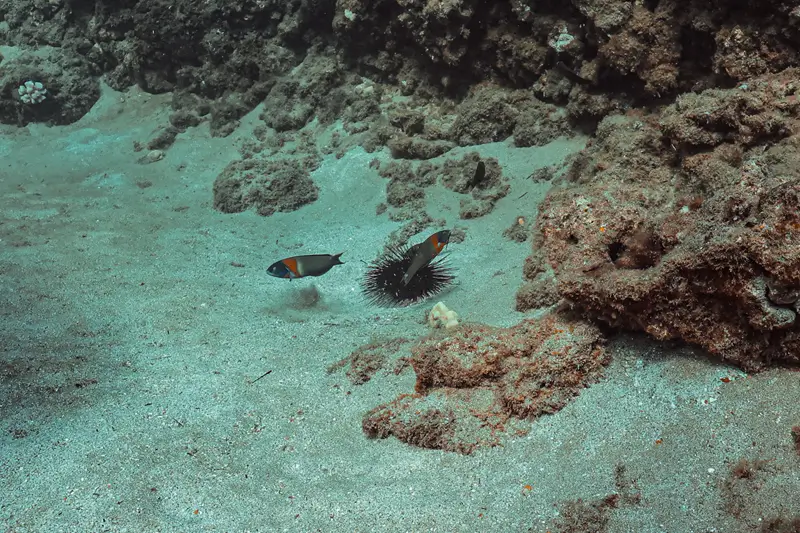
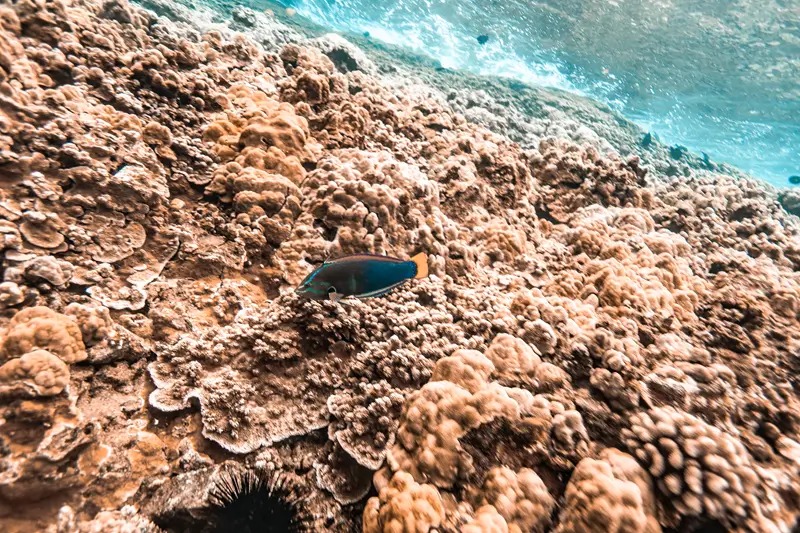
The saddle wrasse is one of Hawaiʻi's common reef fish and a good species to learn first. Adults have a blue head, an orange-to-red band behind it, and a greenish body. That contrasting band is the “saddle” in its name.
What To Look For
Focus on the band's position rather than an exact shade of orange. It crosses the body behind the head, creating a useful landmark when the fish turns. A side view lets you compare the blue head, saddle, and green body together.
Juveniles don't wear the same outfit. They have a dark lengthwise stripe, a pale underside, and a greener or brownish upper body. As they grow, their pattern develops into the familiar adult colors. Terminal-phase males can show a pale or white bar immediately behind the orange saddle.
What It's Doing On The Reef
Saddle wrasses search for small bottom-dwelling animals. Watch for brief reef inspections, quick changes of direction, and the fluttering side fins that characterize their swimming style. Some also follow feeding goatfish, taking advantage of feeding opportunities around them.
Saddle wrasses are native to Hawaiʻi and also recorded at Johnston Atoll. Their range is much more restricted than that of wrasses found across the tropical Indo-Pacific.
2. Yellowtail Coris Wrasse: A Dramatic Change With Age
The yellowtail coris is the fish to remember when two reference pictures seem impossibly different. Its bright young stage and blue-spotted adult appearance belong to the same species.
Adult Identification
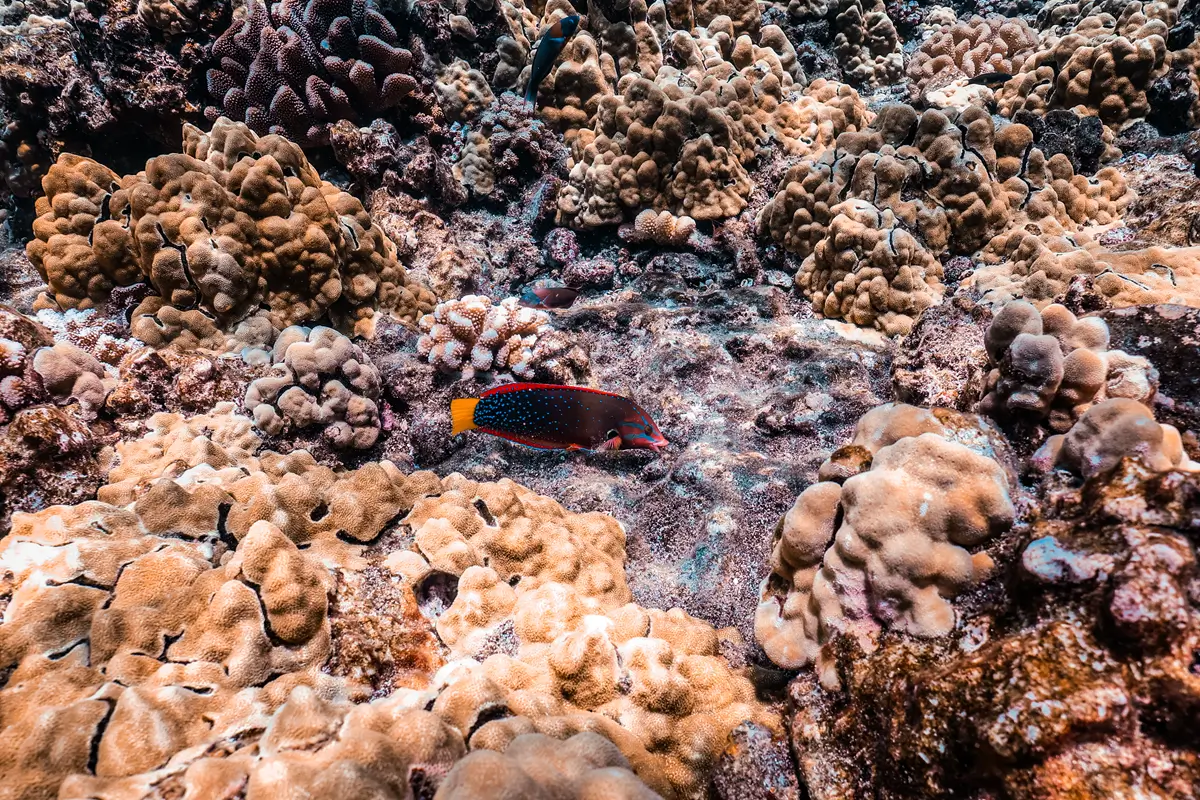
Look for the yellow tail, a reddish or orange-toned head, and numerous blue spots across the darker rear body. Larger terminal-phase males can develop a greenish band behind the pectoral fins. Background colors vary by life stage, so use the combination rather than a single patch of color.
It's native to Hawaiian waters but also occurs elsewhere in the Indo-Pacific. Yellowtail coris, red coris wrasse, and clown wrasse are common names you'll encounter for Coris gaimard. Checking the scientific name helps keep your image search on the right fish.
Why The Juvenile Looks Like A Different Fish
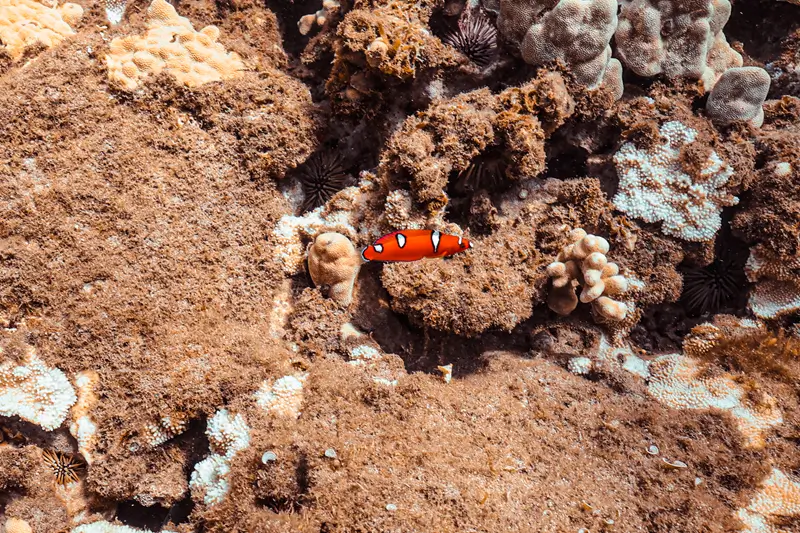
A juvenile yellowtail coris is orange-red with prominent white patches edged in black. Adults look very different, with a yellow tail and numerous small blue spots across the body. Museums Victoria’s species account describes these changes and the markings of larger terminal-phase males.
When comparing juvenile and adult photographs, look at the body outline and colors. The dramatic difference in markings can make two yellowtail coris look like unrelated species.
Sand, Rubble, And A Search For Food
Yellowtail coris use reef areas with sand and rubble and feed on small, bottom-dwelling animals. Larger fish can turn pieces of rubble to expose prey. The sand also provides shelter; some wrasses can bury themselves.
The interesting moment may be a pause to investigate the bottom rather than a fast swim across open water. Watch naturally occurring behavior without moving stones, stirring sand, or trying to uncover a hidden fish.
3. Hawaiian Cleaner Wrasse: Watch The Other Fish, Too
Scientific name: Labroides phthirophagus.
A Hawaiian cleaner wrasse is small, but the activity around it can draw your attention. Larger fish may hover with fins spread or mouths open while the cleaner moves over their bodies.
Adult And Juvenile Markings
Adults have a yellow front, a purple-to-magenta rear, and a strong black stripe along the side. Juveniles are mostly dark with a bright blue stripe along the upper body. Unlike some other wrasses, adult males and females have similar coloration.
This species occurs in the Hawaiian Islands and at Johnston Atoll. It isn't the same species as the bluestreak cleaner wrasse, Labroides dimidiatus, often pictured in general Indo-Pacific guides. A photograph labeled simply “cleaner wrasse” needs a closer check before you use it for identification.
What Happens At A Cleaning Station?
A cleaning station is a place on the reef where fish visit for the cleaner's services. The wrasse picks external parasites and other material from its clients, sometimes working around an open mouth or gill cover. This feeding relationship gives the larger fish a reason to pause instead of swimming away.
Notice the interaction, not just the colorful little fish. A client holding still, a cleaner approaching, and the client moving on can tell a small story in one observation.
Not every wrasse is a dedicated cleaner, so this behavior is especially worth watching. Give the station room, keep hands to yourself, and let the fish come and go without blocking their approach.
The bird wrasse has an exceptionally long, narrow, beak-like snout. Once you've seen a good side view, this is an easier shape to remember than many complicated color patterns.
Females are typically pale toward the front and darker toward the rear, with reddish coloring along the snout. Terminal-phase males are largely blue-green. Small juveniles have shorter jaws, so the adult's most obvious feature isn't equally developed at every age.
The long mouth helps it reach small crustaceans between coral branches and into rocky crevices. It occurs on coral-rich reefs in Hawaiʻi and elsewhere in the Pacific.
Compare the head and mouth before deciding that a pale-and-dark fish and a green fish are different species. The bird wrasse is a useful reminder that shape can remain informative when colors don't match.
5. Ornate Wrasse: Fine Patterns Reward A Careful Look
This smaller wrasse has intricate green and reddish markings rather than the saddle wrasse's broad orange band. Look for fine markings across the face and a patterned body. Young fish and females can show dark spots on the dorsal fin; mature males can lose the prominent middle spot.
That life-stage difference matters. A missing spot doesn't automatically rule out ornate wrasse, just as a brighter overall appearance doesn't prove that you're looking at a different species.
There's a naming complication too. Older references applied Halichoeres ornatissimus to similar fish across a much wider region. A taxonomic study separated Halichoeres claudia and restricted H. ornatissimus to Hawaiʻi and Johnston Atoll.
For a Maui sighting, favor correctly identified Hawaiian reference photographs. A look-alike photographed elsewhere may belong to the related species even when an older caption calls it ornate wrasse.
In this guide, Christmas wrasse means this particular species, also called ladder wrasse. Common names overlap in fish guides, so the scientific name is especially helpful here.
Larger males show a salmon-to-reddish background with strong green markings along the body. Females are greener and less flamboyant. They can resemble surge wrasse, Thalassoma purpureum; head markings help distinguish them, including the surge wrasse's characteristic V-shaped snout mark in the female phase.
Christmas wrasses feed on invertebrates such as crabs, mollusks, and brittle stars. They're associated with shallow, wave-exposed reef habitat, but a fish's ability to live in surge isn't a reason to enter it.
Enjoy any suitable sighting without forcing an identification from a quick glimpse. A photo that clearly shows the head is more useful than a confident guess based only on red and green.
Why Hawaiian Wrasse Colors Change
Growing Up Can Mean A New Pattern
A juvenile pattern can change as a fish matures without that change necessarily representing a change of sex. The red-and-white young yellowtail coris is an example: reaching its adult appearance and becoming a terminal-phase male are separate parts of its possible life history.
Light and viewing angle also complicate the comparison. Underwater colors in your photograph may not match a brightly lit reference image. Keep body shape, marking placement, and habitat in mind when identifying.
Some Wrasses Change Sex, But Not All Follow One Script
Several species can change from female to male. Scientists call this protogyny. In descriptions of some wrasses, “initial phase” refers to an adult color form that can include females and certain males. “Terminal phase” describes a later male form, often with different markings.
Don't assume every wrasse starts as a female or that the brightest fish must have changed sex. Saddle wrasses can mature initially as either males or females. Their reproductive changes also depend on social conditions, not just age or size.
For snorkeling, the practical lesson is reassuring: you don't need to determine a fish's sex to recognize the species. And the Hawaiian cleaner wrasse shows why color alone can't settle the question, because adult males and females look similar.
Wrasse Behavior Worth Slowing Down For
Watching behavior gives your fish list some personality. Many wrasses are daytime foragers, moving from one possible meal to the next. Some pluck small animals from crevices, while others investigate sand or rubble. The bird wrasse's narrow mouth and the yellowtail coris's rubble-turning behavior show different ways of reaching food.
At night, resting strategies differ. Some wrasses bury in sand; others shelter among reef structure. Hawaiian cleaner wrasses are a useful exception to the sand-burying assumption, resting without burying and producing a mucus covering.
You don't need to follow a fish into the evening to appreciate that difference. Leave resting animals undisturbed and concentrate on the daytime activity available during an appropriate snorkeling outing.
Where To Look For Wrasse While Snorkeling Maui
When looking for Hawaiian wrasses around Maui, start with the habitat: rocky reef surfaces, coral formations, and nearby patches of sand or rubble. Then watch how each fish moves and feeds. A wrasse inspecting the bottom offers different identification clues from one working around a larger fish at a cleaning station.
Molokini Crater: Watch fish moving above rocky reef surfaces and around coral formations. Look for a clear side view so you can compare the head, body markings, and tail. Our Molokini Crater guide explains more about the location and planning a visit.
Turtle Town: Look for larger fish that pause near reef structure. When Hawaiian cleaner wrasses are present, you may see them circling a waiting fish. Observe from a distance and leave the cleaning station’s approach open. Learn more in our Turtle Town snorkeling guide.
Coral Gardens: Scan coral heads, rocky areas, and adjacent sand or rubble. Notice whether a fish probes a crevice, inspects the bottom, or swims between coral formations. Combine that behavior with its markings before identifying it. Our Coral Gardens guide provides more information about the area.
No particular wrasse species is guaranteed at any location. Visibility, habitat, and ocean conditions affect what you can observe. Stay with your buddy, follow crew guidance, and let fish move through their habitat without chasing them for a closer look.
How To Watch And Photograph Wrasses
Before entering, choose conditions that match your ocean-swimming ability and follow lifeguard or crew instructions. Stay with your buddy and keep enough clearance above the reef that your fins and equipment can't brush coral.
For identification, a clear side view showing the head, tail, and strongest markings is especially useful. A short video can help you revisit a turn or movement you missed in a still image. Use our Maui Snorkeling Photography Guide for equipment and camera tips.
Don't chase a wrasse, uncover it from sand, move reef rubble, or offer food to create a photo opportunity. Keep cleaning stations open and let fish approach their clients naturally. Check in regularly to see how your buddy is doing and where they are; a fascinating little fish shouldn't make you forget the return swim.
Ready to snorkel Maui?
Snag your spot on a Maui Snorkeling Tour! Make your ocean day easy with snorkel gear, food, crew support, and simple online booking.
5-Hr Morning Adventure: Molokini Crater Snorkeling Tour
3-Hr Afternoon Reef Trip: Maui Afternoon Snorkeling Tour
Not in this guide. It describes several wrasse species found in Hawaiian waters, including saddle, yellowtail coris, Hawaiian cleaner, bird, ornate, and Christmas wrasses. Use the scientific name when comparing photographs, because common names can overlap between different species.
An adult saddle wrasse is a strong possibility. Look for the orange-to-red band together with a blue head and greenish body. Juveniles have a different striped pattern, so the adult's saddle isn't a feature to expect at every age.
Both names are used for Coris gaimard. The striking red-and-white juvenile and the blue-spotted adult can look like unrelated fish. Confirm the scientific name before comparing photographs, especially when a guide uses the broader common name clown wrasse.
Don't assume that. Female-to-male sex change occurs in several species, but their life histories differ. Saddle wrasses can mature initially as males or females. A different color can also reflect growth rather than a change of sex.
No. Many feed mainly on small animals around rock, coral, sand, or rubble. Hawaiian cleaner wrasses specialize in feeding from other fish. Watch both the wrasse and its client to recognize a cleaning interaction rather than relying on color alone.
The bird wrasse, Gomphosus varius, has a distinctive beak-like snout used to reach prey in reef crevices. Adult colors differ between phases, and young fish have shorter jaws. Compare the head profile as well as the fish's color.
Some do, including yellowtail coris, but sand-burying isn't universal. Other wrasses shelter among the reef, and Hawaiian cleaner wrasses produce a mucus covering. Don't disturb sand, lift rubble, or uncover a resting fish to confirm its identity.
Several Hawaiian wrasses occupy reef habitat that can be visible from the surface in suitable conditions. Others may be too deep or distant to identify. Choose an appropriate snorkeling area and enjoy what appears without diving down or chasing a particular fish.
Hīnālea is a Hawaiian name used for wrasses, but different species have more specific names. The saddle wrasse is hīnālea lauwili, the yellowtail coris is hīnālea ʻākilolo, and the bird wrasse is hīnālea ʻiʻiwi.
Final Thoughts On Hawaiian Wrasse
Start with three memorable clues: the saddle wrasse's orange band, the adult yellowtail coris's yellow tail and blue spots, and the Hawaiian cleaner wrasse's striped body and cleaning behavior. Then let each new sighting add another detail.
You don't need to identify every fish to enjoy Maui's reefs. But learning why one species changes colors, why another probes between branches, or why larger fish pause for a cleaner turns a colorful swim into something you'll remember long after the boat ride home.
Sources & Updates
These references support identification, life-stage changes, behavior, and range. Older common names and range descriptions can differ; compare scientific names and current species treatments. Wildlife sightings aren't guaranteed.