Spotted Eagle Rays In Maui: Hīhīmanu Snorkeling Guide
February 21st, 2025
| Marine Life
Written by Maui Snorkeling, operating tours to Molokini Crater, Turtle Town, and Coral Gardens from Māʻalaea Harbor since 1985. Tours are led by USCG-licensed captains aboard a USCG-inspected passenger vessel.
Last updated July 29, 2026
Quick Answer
Spotted eagle rays in Maui, also called hīhīmanu, are graceful rays that sometimes glide near reef edges, sandy channels, and deeper drop-offs around places like Molokini Crater, Turtle Town, Coral Gardens, Olowalu, Kaʻanapali, and Honolua Bay. Sightings aren’t guaranteed because they’re wild animals, but calm, clear morning water gives snorkelers the best chance to spot them.
Main Takeaways:
Hawaiian Name: Hīhīmanu, often translated as magnificent bird or elegant bird
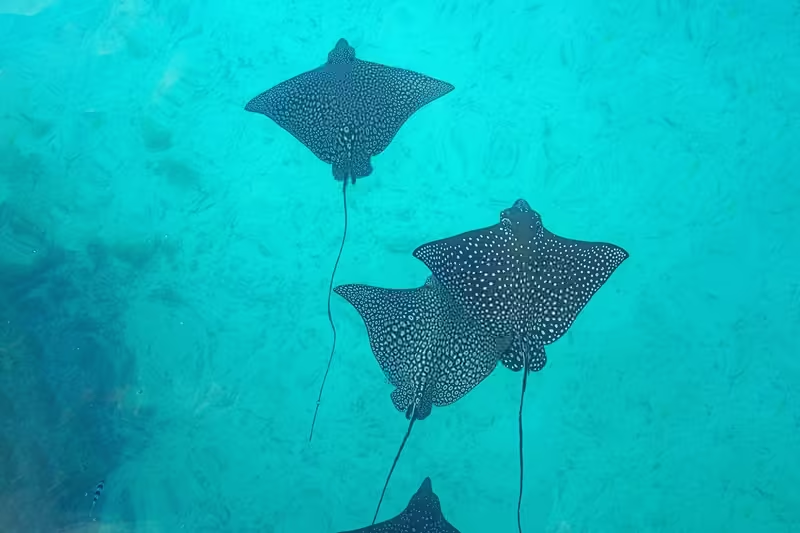
How To Identify Them: Look for white spots, a dark back, a white underside, wing-like fins, and a long tail
Possible Maui Sighting Areas: Molokini Crater, Turtle Town, Coral Gardens, Olowalu, Kaʻanapali, and Honolua Bay
Best Conditions: Calm morning water with clear visibility
Respectful Viewing: Don’t touch, chase, crowd, or block the ray’s path
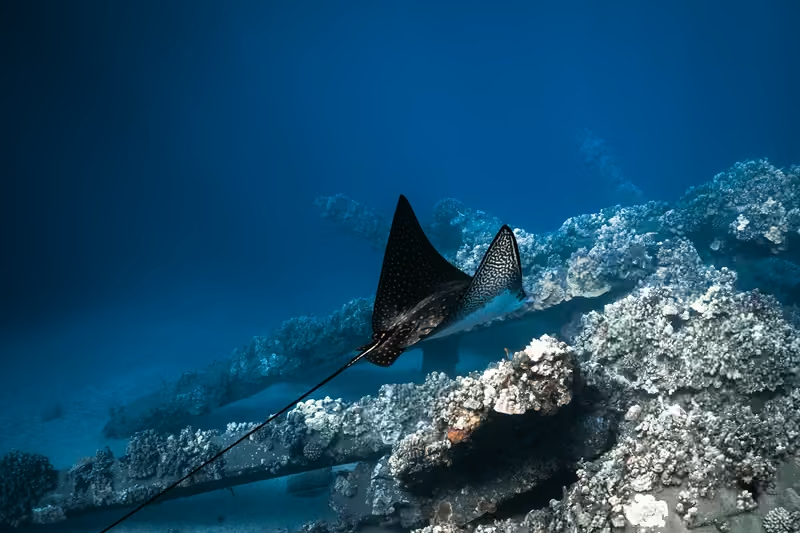
Maui’s reefs are full of bright fish, coral gardens, sea turtles, and other amazing marine life, but a spotted eagle ray sighting feels extra special. These graceful rays glide through the water with wide, wing-like fins, dark backs, white spots, and long tails that trail behind them like ribbons.
In Hawaiian, the spotted eagle ray is often called hīhīmanu, a name commonly translated as “magnificent bird” or “elegant bird.” Once you see one move through the ocean, the name makes perfect sense. It doesn’t flap or dart like many reef fish. It looks like it’s flying underwater.
If you’re hoping to see spotted eagle rays in Maui, this guide will help you understand what they are, where they’re sometimes seen, what conditions are best, and how to enjoy the moment respectfully. Like all wild marine animals, sightings are never guaranteed, but knowing what to look for makes the experience even better.
Spotted Eagle Ray Facts At A Glance
Here’s a quick look at spotted eagle rays in Maui, also called hīhīmanu. The biggest thing to remember is that sightings are special, but they’re never guaranteed because these are wild marine animals.
Fact
What To Know
Common name
Spotted eagle ray
Hawaiian name
Hīhīmanu, also written as hihimanu
Scientific name
Aetobatus ocellatus is often used for the Indo-Pacific species, while some older Hawaiʻi references still use Aetobatus narinari
How to identify one
Look for a dark back, white spots or rings, a white underside, wing-like fins, a pointed snout, and a long tail
Possible Maui sighting areas
Molokini Crater, Turtle Town, Coral Gardens, Olowalu, Kaʻanapali, Honolua Bay, and other reef edges
Best viewing conditions
Calm, clear morning water usually gives snorkelers the best visibility
What they eat
Clams, oysters, crabs, shrimp, worms, small fish, and other prey found near sandy or reef-bottom habitats
Are they dangerous?
They aren’t aggressive toward snorkelers, but you should never touch, chase, crowd, or block their path
Bottom line
A spotted eagle ray sighting is a special Maui snorkeling moment. Stay calm, give it space, and let it glide by naturally.
Note: Spotted eagle rays are wild animals, so sightings can’t be guaranteed on any Maui snorkeling tour. This table is based on current species references and responsible marine wildlife viewing guidance reviewed in May 2026.
What Is A Spotted Eagle Ray?
A spotted eagle ray is a type of cartilaginous fish, which means its body is supported by cartilage instead of bone. Sharks and rays share this same flexible structure. This helps spotted eagle rays move smoothly through the water and turn with surprising control.
The first thing most people notice is the ray’s shape. Its large pectoral fins stretch out like wings, and its long tail trails behind its body. From above, the ray usually looks dark gray, black, or bluish-black with white spots or rings. From below, it has a bright white belly, often with dark markings on the underside of the wings.
Spotted eagle rays are built for movement. They don’t crawl along the bottom like some rays. Instead, they often glide through open water, along reef edges, or over sandy areas where they search for food.
Hīhīmanu: The Hawaiian Name For Spotted Eagle Rays
In Hawaiʻi, the spotted eagle ray is commonly called hīhīmanu. You’ll also see it written without diacritics as hihimanu, especially in travel writing and older online articles.
The name is often translated as “magnificent bird” or “elegant bird.” It’s a beautiful fit because these rays seem to fly through the sea. When a hīhīmanu glides past a reef wall or sandy channel, its movement feels calm, steady, and powerful all at once.
For visitors, learning the Hawaiian name adds meaning to the encounter. It’s not just another marine life sighting. It’s a reminder that Maui’s ocean has cultural, ecological, and personal importance to the people who call Hawaiʻi home.
How To Identify Spotted Eagle Rays In Maui
Spotted eagle rays are one of the easier rays to recognize in clear water. Look for these features:
White spots on a dark back: Their top side is usually dark with white or pale spots.
White underside: If the ray banks or turns, you may see its bright white belly.
Wing-like fins: Their wide pectoral fins move in a smooth, flying motion.
Pointed snout: Their head has a distinct shape that helps them root through sand for food.
Long tail: The tail is thin and whip-like, with defensive barbs near the base.
They’re often seen alone, in pairs, or in small groups. Sometimes they cruise steadily along a reef edge. Other times, they may pass quickly through open water and disappear before you can get a photo.
Where To See Spotted Eagle Rays In Maui
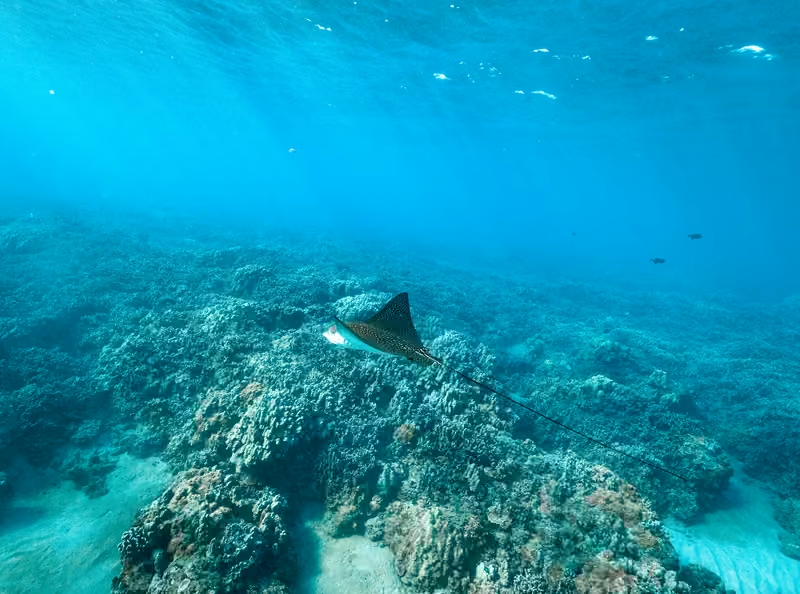
Spotted eagle rays can appear in many areas around Maui, especially near reefs, sandy channels, and deeper edges. The important word is “can.” These are wild animals, and they don’t follow a tour schedule.
Molokini Crater
Molokini Crater is one of Maui’s most famous snorkeling destinations. Its clear water, protected reef habitat, and deeper outer edges make it a possible place to see spotted eagle rays. They’re more likely to be seen cruising along reef walls or passing through deeper water than sitting still in one spot.
Our Molokini Crater Snorkeling Tour is a 5-hour morning trip from Maʻalaea Harbor that aims to visit Molokini Crater and Turtle Town, weather permitting. Wildlife sightings are never guaranteed, but mornings are often calmer and offer better visibility.
Turtle Town
Turtle Town is best known for Hawaiian green sea turtles, but spotted eagle rays may also pass through the area. South Maui reefs often feature a mix of coral, lava rock, and sandy patches where rays can forage or move between reef zones.
If you see a ray near Turtle Town, stay calm and let it move naturally. Don’t dive down toward it or swim directly behind it. The best encounters happen when you give wildlife room.
Coral Gardens
Coral Gardens is a West Maui reef area known for colorful fish, coral formations, and clear conditions when the weather cooperates. Spotted eagle rays aren’t the main animal people come here to see, but they can sometimes move through reef edges and sandy corridors.
Our Maui Afternoon Snorkeling Tour usually visits Coral Gardens or another nearby reef based on the day’s conditions. It’s a good option if you’d rather sleep in, take a shorter trip, or snorkel without an early-morning start.
Olowalu Reef
Olowalu is a large reef system along West Maui. The area includes coral heads, sandy patches, and reef channels, which can make it attractive to a wide range of marine life. Spotted eagle rays may be seen gliding through open sections or feeding along sandy bottom areas.
Kaʻanapali Beach And Black Rock
Kaʻanapali Beach is a popular resort area, and Black Rock has deeper edges where marine life sometimes passes through. Early morning is usually better because the water is often calmer and there are fewer people in the ocean.
Honolua Bay
Honolua Bay is known for beautiful reef life when conditions are calm. It can be a good spot to see rays moving through deeper areas or along the reef edge. As with any northwestern Maui snorkel site, conditions matter a lot. If the ocean looks rough, cloudy, or unsafe, don’t snorkel.
Best Time And Conditions To See Spotted Eagle Rays
There isn’t a guaranteed spotted eagle ray season in Maui. They can be seen at different times of year, but your chances of spotting any marine life improve when visibility is good and the water is calm.
Morning Is Usually Best
Morning is often the best time to snorkel in Maui because the winds are usually lighter earlier in the day. Calmer water helps visibility, and better visibility helps you spot larger animals moving along reef edges.
Clear Water Helps
Spotted eagle rays can pass by quickly, so cloudy water makes sightings harder. After heavy rain, runoff, or strong surf, visibility can drop. It’s always better to wait for safer, clearer conditions.
Reef Edges And Sandy Channels Matter
Spotted eagle rays often travel near the places where reef, sand, and deeper water meet. Sandy spaces can hold prey, while reef edges create natural paths for marine animals moving through the area.
What Do Spotted Eagle Rays Eat?
Spotted eagle rays feed on hard-shelled and bottom-dwelling animals such as clams, oysters, crabs, shrimp, worms, and small fish. Their mouths are designed for crushing. Instead of sharp, biting teeth like many predators, they have strong dental plates that help break shells.
They also have special sensory pores called ampullae of Lorenzini. These help rays detect tiny electrical signals from prey hidden in the sand. Think of it like a built-in detector that helps them find food they can’t see.
When a ray is feeding, it may use its snout to root through sand. If you see a ray doing this, give it plenty of space. Feeding is a natural behavior, and getting too close can interrupt it.
Are Spotted Eagle Rays Dangerous?
Spotted eagle rays aren’t aggressive toward snorkelers. Most of the time, they’ll swim away if people get too close. Their long tail can have one or more barbed spines near the base, but these are defensive, not something the ray uses to hunt people.
The safest approach is simple: don’t touch, chase, corner, or crowd them. Let the ray choose its path. If it swims toward you, stay calm and float still. If it swims away, don’t follow it.
Spotted Eagle Rays Vs. Stingrays
People often use the word “stingray” for many types of rays, but the hīhīmanu is an eagle ray. In Hawaiʻi, spotted eagle rays are often described separately from true stingrays because their body shape, swimming style, and spine placement are different.
The easiest way to think about it is this: spotted eagle rays are built for graceful swimming through open water, while many true stingrays spend more time resting on or near the seafloor. Both deserve space and respect.
How To Watch A Spotted Eagle Ray Respectfully
A spotted eagle ray encounter is exciting, but the goal is to observe without changing the animal’s behavior. Here’s how to do that:
Stay calm: Fast kicking and splashing can scare wildlife away.
Give it room: Don’t swim directly toward the ray.
Don’t chase: Let the ray pass naturally.
Never touch: Touching can harm the animal and put you at risk.
Don’t block its path: Always leave open water for the ray to move away.
Use your camera zoom: Don’t move closer just to get a better photo.
Protect the reef: Don’t stand on coral, kick coral, or feed fish.
Responsible snorkeling helps protect Maui’s reefs and gives future guests the chance to enjoy the same wildlife moments.
Photographing Spotted Eagle Rays
If you’re lucky enough to see a spotted eagle ray, it’s natural to want a photo or video. The best photos usually come from staying still and letting the ray move through the frame.
Keep your fins up, avoid sudden kicks, and don’t dive down toward the animal. If the ray is too far away, enjoy the moment with your eyes instead of chasing the shot. A peaceful sighting is better than a blurry close-up that stresses the animal.
How Maui Visitors Can Help Protect Hīhīmanu
Spotted eagle rays depend on healthy ocean habitats. That means clean water, living reefs, safe feeding areas, and respectful human behavior all matter.
You can help by choosing mineral sunscreen, wearing sun-protective clothing, keeping trash out of the ocean, avoiding contact with coral, and booking with operators who follow responsible wildlife practices.
In Maui County, only mineral sunscreens are allowed without a prescription. Look for zinc oxide or titanium dioxide as the active ingredients, and pair sunscreen with rash guards, hats, shade, and other sun protection whenever possible.
Ready to Explore Maui’s Underwater World?
Experience Maui’s ocean environment aboard the Lani Kai II. We’ll provide snorkel gear, food, and friendly crew support, so you can focus on the adventure!
Tours depart from Maʻalaea Harbor. Routes, snorkel sites, and marine life sightings vary with ocean conditions.
Spotted Eagle Ray FAQs
Spotted eagle rays may be seen near Molokini Crater, Turtle Town, Coral Gardens, Olowalu, Kaʻanapali, Honolua Bay, and other reef edges around Maui. Sightings are possible but never guaranteed because they’re wild animals.
Morning is usually best for snorkeling in Maui because the ocean is often calmer and visibility is usually better. Clear water makes it easier to spot rays moving along reef edges and sandy channels.
Spotted eagle rays aren’t aggressive and usually swim away from people. They do have defensive barbs near the base of the tail, so it’s important to give them space and never touch, chase, or corner them.
Stay calm, float quietly, and give the ray plenty of room. Don’t swim directly toward it, don’t dive down after it, and don’t block its path. Let it pass naturally.
Spotted eagle rays eat bivalves, crustaceans, worms, small fish, and other prey found near sandy or reef-bottom habitats. Their strong dental plates help crush hard shells.
Spotted eagle rays can grow large, with wingspans commonly described around 6 feet or more in Hawaiʻi references. Some scientific references list larger maximum disc widths for the Indo-Pacific species.
Yes. Hīhīmanu is the Hawaiian name commonly used for the spotted eagle ray. You may also see it written as hihimanu without diacritics.
No. Spotted eagle rays are wild animals, so no tour can guarantee a sighting. A guided tour can take you to good snorkel areas based on the day’s conditions, but marine life moves naturally.
Final Thoughts On Spotted Eagle Rays In Maui
Seeing a spotted eagle ray in Maui is one of those ocean moments that stays with you. The white spots, long tail, and slow wing-like movement make hīhīmanu one of the most beautiful animals you might see while snorkeling.
The best way to enjoy the experience is to stay calm, keep your distance, and let the ray move freely. When you respect Maui’s marine life, you’re not just protecting one animal. You’re helping care for the reefs, sandy channels, and ocean habitats that make Maui snorkeling so special.
If a spotted eagle ray glides past you, don’t rush the moment. Float still, breathe slowly, and enjoy the view. You’re a guest in its world, and that’s what makes the sighting so unforgettable.
Sources & Updates
For spotted eagle ray facts, snorkeling safety, wildlife viewing guidance, and current ocean conditions, use the trusted resources below.