Yellow Tang in Maui: How To Spot This Bright Reef Fish
June 13th, 2025
| Marine Life
Written by Maui Snorkeling, operating tours to Molokini Crater, Turtle Town, and Coral Gardens from Māʻalaea Harbor since 1985. Tours are led by USCG-licensed captains aboard a USCG-inspected passenger vessel.
Last updated September 28, 2026
Quick answer
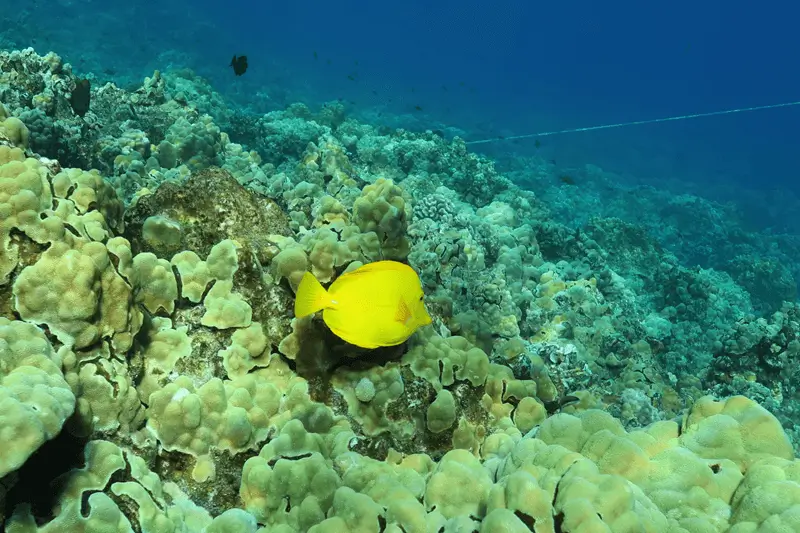
Yellow tang in Maui, called lauʻīpala in Hawaiʻi, are bright yellow reef fish with oval-shaped bodies, pointed snouts, and small white tail spines. Snorkelers may see them near coral reefs and rocky reef edges when the water is calm and clear.
Main takeaways:
Hawaiian name: The yellow tang is called lauʻīpala in Hawaiʻi
Best ID clue: Look for a solid bright yellow body with an oval shape and pointed snout
Where to look: Watch near coral reefs, lava rock, reef edges, and areas with healthy algae growth
Best conditions: Calm mornings with clear water make yellow tangs easier to spot
Snorkeling tip: Don’t chase or feed reef fish. Float slowly and let them move naturally around the reef
When you snorkel in Maui, yellow tangs are often one of the first reef fish visitors notice. Their bright yellow color stands out against blue water, lava rock, and coral reef structure.
Known in Hawaiʻi as lauʻīpala, yellow tangs are more than colorful fish. They’re algae grazers that help support healthier coral reefs. This guide explains how to identify yellow tangs, where you may see them in Maui, and how to watch them responsibly while snorkeling.
What is the Yellow Tang?
The yellow tang (Zebrasoma flavescens) is one of Hawaii's most beloved reef fish. With its bright yellow body, round shape, and pointed snout, it shines against turquoise waters and coral reefs. These fish are herbivores, so you’ll often see them grazing along the reef to keep it clean and healthy. They are part of a larger group of tang species, each with an important role in reef balance.
The Ecological Superstars of Maui's Reefs
Before they became a global aquarium sensation, yellow tangs were, and still are, very important to Maui's coral reefs. From Ka'anapali's Black Rock to the Ahihi-Kinau Natural Area Reserve, they are vital to reef health. They keep the reef strong and support the marine life that draws visitors from around the world.
The Tireless Gardeners of the Coral Kingdom
Imagine a garden constantly under attack by fast-growing weeds. On a reef, that "weed" is algae. Yellow tangs act like gardeners, grazing all day on filamentous algae and even short, mat-like turf algae.
Preventing Algal Overgrowth: By trimming algae, they stop it from covering coral polyps. Corals need sunlight, and too much algae can block it.
Creating Space for New Life: Their grazing opens spots for new coral to grow, helping reefs stay alive.
An Abundant Presence: Yellow tangs are common in healthy Maui coral reefs. Their bright color and group behavior make them a favorite sight for snorkelers and divers.
Yellow Tang Quick Facts
Here’s a simple look at the yellow tang, also called lauʻīpala in Hawaiʻi.
Topic
Details
Common name
Yellow tang
Hawaiian name
Lauʻīpala
Scientific name
Zebrasoma flavescens
Size
Up to about 8 inches, or 20 cm
Best ID clues
A solid bright yellow body, oval shape, pointed snout, and small white spine near the tail base
Where to look
Coral reefs, lava rock, reef edges, and clear reef areas with healthy algae growth
How they move
Often graze close to reef structure, either alone, in pairs, or in loose groups
What they eat
Mostly algae picked from reef surfaces, which helps keep coral reefs healthier
Common lookalike
Other yellow reef fish, including some butterflyfish, can look similar from a distance, but yellow tangs have a rounder body and surgeonfish shape
Snorkeling tip
Slow down and float. Don’t chase fish, feed marine life, or touch the reef.
Note: Yellow tang sightings aren’t guaranteed. Calm water, good visibility, and healthy reef structure give snorkelers the best chance to spot them.
Yellow Tang Behavior Snorkelers May Notice
Yellow tangs are active during the day, so snorkelers often see them grazing along rock and coral surfaces. They use their small mouths to pick algae from the reef, then move from one feeding spot to the next.
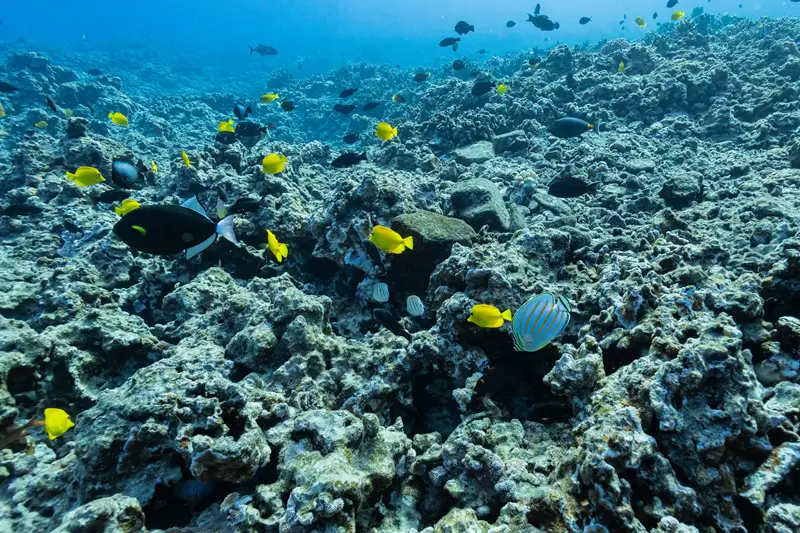
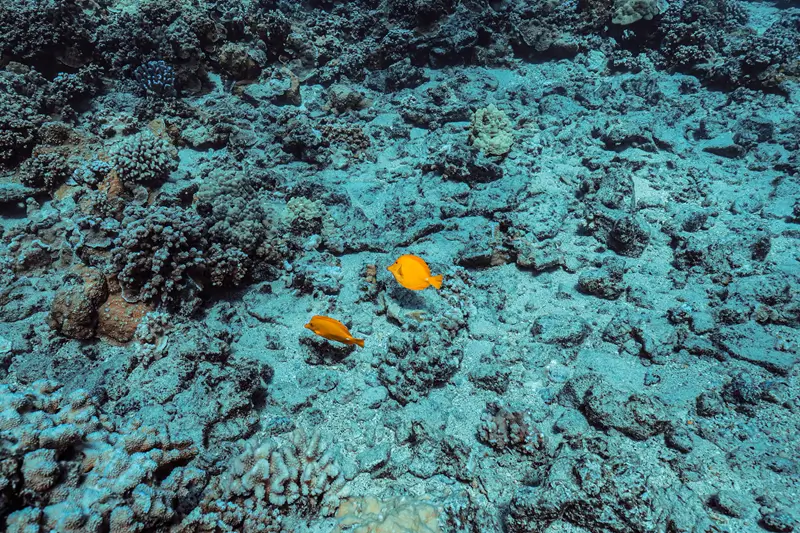
You may see yellow tangs alone, in pairs, or in loose groups. In some reef areas, larger groups can form where food and shelter are available. At night, yellow tangs shelter near reef structure for protection.
Yellow tangs can spawn around the full moon, and their eggs drift into the water column before larvae settle back to reef habitat. For snorkelers, the easiest behavior to notice is their steady grazing close to the reef.
Social Behavior: Strength in Numbers
Yellow tangs are often alone, but adults prefer large schools. Sometimes, groups of fish have hundreds of individuals, making it harder for predators to catch them.
Within these schools, tangs get the best feeding spots, chasing away smaller ones.
7 Easy Yellow Tang ID Tips for Snorkelers
Yellow tangs are one of the easiest reef fish to recognize in Maui, but a few simple clues can help you spot them with more confidence while snorkeling.
Look for the bright yellow color: Yellow tangs are usually a solid, vivid yellow from head to tail.
Notice the oval body shape: Their body is flat, rounded, and oval-shaped, which helps separate them from longer reef fish.
Check the pointed snout: Yellow tangs have a small, pointed snout that they use to pick algae from reef surfaces.
Watch for grazing behavior: They often move close to rocks, coral, and reef edges as they nibble algae throughout the day.
Look near reef structure: You’re more likely to see yellow tangs near coral, lava rock, and reef ledges than over open sand.
Notice how they move: Yellow tangs may swim alone, in pairs, or in loose groups, often staying close to the reef.
Don’t confuse them with butterflyfish: Some yellow reef fish look similar from a distance, but yellow tangs have a rounder surgeonfish shape and a cleaner solid-yellow body.
For the best viewing, slow down and float calmly. Don’t chase yellow tangs or feed reef fish. When you let the reef stay natural, you’ll often see more activity around you.
Where To See Yellow Tangs While Snorkeling In Maui
Yellow tangs may be seen around Maui reefs with clear water, healthy algae growth, and plenty of reef structure. They’re often easier to spot when conditions are calm, especially in the morning.
Molokini Crater: A strong choice for clear-water reef fish sightings on calm mornings.
Coral Gardens: A good reef area for colorful fish, coral, and rocky reef structure.
Black Rock: A popular West Maui shore snorkel spot where yellow tangs may be seen near reef edges.
Turtle Town and South Maui reefs: Reef-rich areas where tangs, butterflyfish, and other tropical fish may appear.
Yellow tang sightings aren’t guaranteed, but calm water, good visibility, and healthy reef structure give snorkelers the best chance.
Yellow Tang Conservation and Reef Health in Hawaii
Yellow tangs are more than beautiful reef fish. In Maui, these bright yellow swimmers help support healthier coral reefs by grazing on algae that grows across reef surfaces. When algae-eating fish are part of a balanced reef, coral has a better chance to grow, settle, and stay healthy.
Yellow tangs have also been one of Hawaii’s most recognizable aquarium fish. Their bright color made them popular in home saltwater tanks, sparking years of debate over wild collection, reef health, and how to protect Hawaii’s marine life. Today, many aquariums and hobbyists are also aware of captive-bred yellow tangs, which can help reduce pressure on wild reef fish.
Why Yellow Tangs Matter on Maui Reefs
When you see a yellow tang while snorkeling in Maui, you’re watching a reef grazer at work. These fish pick algae from rocks and reef surfaces throughout the day. That may sound simple, but it’s an important job. Too much algae can crowd coral, block sunlight, and make it harder for new coral to grow.
This is why it’s important to watch yellow tangs without disturbing them. Don’t chase them, don’t feed them, and don’t touch the reef. Slow, calm snorkeling gives you a better view and helps keep Maui’s reef life moving naturally.
A Simple Conservation Reminder
Hawaii’s reef fish need clean water, healthy coral, and respectful visitors. Yellow tangs are a great reminder that even small fish can play a big role in the ocean. By using reef-safe practices, checking ocean conditions, and giving marine life plenty of space, snorkelers can help protect the reefs that make Maui so special.
Ready to Explore Maui’s Underwater World?
Experience Maui’s ocean environment aboard the Lani Kai II. We’ll provide snorkel gear, food, and friendly crew support, so you can focus on the adventure!
Tours depart from Maʻalaea Harbor. Routes, snorkel sites, and marine life sightings vary with ocean conditions.
FAQs
Yes, snorkelers may see yellow tangs around Maui’s coral reefs when the water is calm and clear. Sightings aren’t guaranteed, but reef areas with healthy algae growth give you a better chance.
Yellow tangs may be seen near reef-rich areas like Molokini Crater, Coral Gardens, Black Rock, and other healthy Maui reefs. Look near coral, lava rock, reef edges, and clear water instead of open sand.
A yellow tang has a bright yellow body, oval shape, pointed snout, and small white spine near the base of its tail. Its solid yellow color makes it one of the easiest Maui reef fish to recognize.
Yellow tangs mostly eat algae from reef surfaces. This grazing helps keep algae growth in balance and gives coral more room to grow.
Yes, yellow tangs are safe to swim near. Like all reef fish, they should be watched calmly from a respectful distance. Don’t chase, touch, or feed them.
Yes, yellow tangs play an important role on the reef because they graze on algae. Healthy algae-eating fish help support stronger coral reef ecosystems.
Final Thoughts on Yellow Tang in Maui
Yellow tangs are one of the brightest and easiest reef fish to spot while snorkeling in Maui. Their bold yellow color, oval body, and busy grazing behavior make them a favorite for visitors exploring healthy coral reefs, lava rock, and clear reef edges.
They’re also an important part of Maui’s reef ecosystem. By grazing on algae, yellow tangs help give coral more space to grow and stay healthy. When you see one on the reef, slow down, float calmly, and enjoy the moment without chasing, feeding, or touching marine life.
If you’re hoping to see colorful reef fish like yellow tangs, calm morning conditions often give snorkelers the best chance. A guided Maui snorkeling tour can help you find clear water, learn more about reef life, and enjoy the ocean in a safe, respectful way.
Sources & Updates
Use these trusted resources to confirm yellow tang identification, reef fish details, reef health, ocean safety, water quality, and marine conditions before you snorkel.