簡単な回答
Yes, there are starfish in Maui, more accurately called sea stars. This guide covers six Hawaiian types, including spotted Linckia, green Linckia, magnificent sea stars, cushion stars, knobby stars, and crown-of-thorns. They're living marine animals, not fish. Some hide or occupy habitats too deep for a good surface view, so learn their shapes, leave them where you find them, and treat a sighting as a bonus rather than a tour promise.
主な要点:
-
識別: Compare body shape, arm length, surface texture, and habitat instead of relying only on color.
-
Different Shapes: Some sea stars have slender arms, while adult cushion stars look rounded and pillow-like.
-
Regeneration: Uneven arms can reflect regrowth, but not every species can rebuild from a detached arm.
-
Brittle Stars: These relatives have a distinct central disc and thin, jointed arms; they're a separate group.
-
Crown-Of-Thorns: Keep clear of venomous spines and report unusual concentrations rather than attempting your own removal.
-
リーフエチケット Keep sea stars submerged, don't move rocks, and photograph wildlife without touching the reef.
A five-armed shape tucked beside the reef can be just as memorable as a passing turtle. It doesn't dart away or flash through a school of fish. Instead, a sea star rewards a different kind of snorkeling: noticing the details that are easy to swim past.
Starfish in Maui are living reef animals, more accurately called sea stars. Some have slender, spotted arms. Others look like small cushions or carry a crown of spines. Learning those differences makes a possible sighting far more interesting than simply checking “starfish” off a vacation list.
Here's how to recognize several Hawaiian sea stars, understand their unusual biology, and enjoy an encounter without moving the animal or disturbing its habitat.
Starfish Or Sea Star: What's The Difference?
Both names refer to the same animals, but sea star avoids the misleading impression that these are fish. Sea stars belong to the echinoderms, the group that also includes sea urchins, sea cucumbers, and brittle stars.
True sea stars belong to the class Asteroidea. Tiny tube feet beneath their bodies help them move and hold onto surfaces, powered by a water vascular system. They aren't decorations attached to the reef, even when they appear motionless.
For another member of this surprisingly varied animal group, meet the sea cucumbers found around Maui. They look completely different, but the relationship is real.
Can You See Starfish While Snorkeling Maui?
Yes, but make a sea star a bonus, not the whole plan. Spotted Linckia and knobby stars have documented Maui sightings. Some sea stars occupy crevices or deeper habitats, so their presence around the island doesn't mean they'll be easy to see from the surface.
A comfortable view of the reef matters more than rushing to a supposed starfish hotspot. Look across exposed rock, reef edges, and adjoining sand while keeping yourself well clear of the bottom. Don't turn over rocks or reach into holes to reveal something hidden.
The following identification clues cover six distinctive types found in Hawaiian waters. They aren't a complete species list or a promise of six sightings on one swim.
1. Spotted Linckia: The Sea Star With Uneven Arms
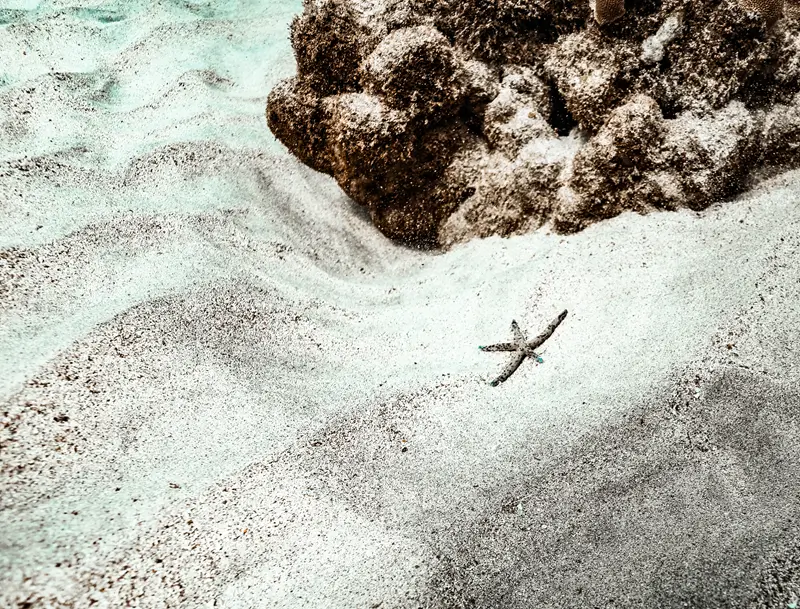
学名: Linckia multifora. Also called the mottled or freckled Linckia, this sea star has slender arms with scattered spots. Its background color can vary, so don't expect every individual to match one pink, brown, or purple reference photograph.
Look at the shape and markings together. Linckia may occupy reef crevices, and a partially visible arm can blend into the surrounding textures. A documented photograph from Maui shows why these animals reward a second look.
What Is A “Comet” Sea Star?
Some Linckia have one long arm and several much shorter ones, creating a comet-like outline. This can be a stage of regeneration, not a separate species. Linckia are among the few sea stars capable of producing a whole animal from a detached arm.
That ability isn't permission to handle or test one. Regeneration is part of the animal's biology, not protection against every injury. Leave an uneven-looking individual exactly where it is.
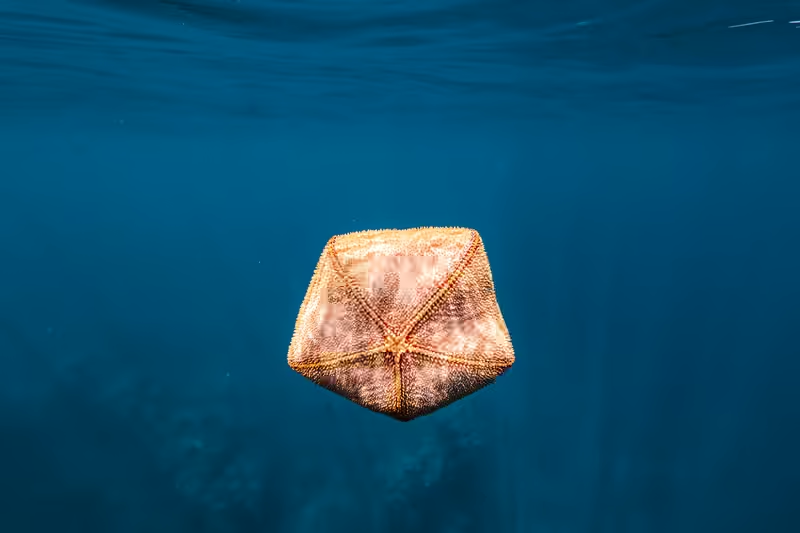
2. Cushion Star: A Sea Star Hiding In Plain Sight
学名: Culcita novaeguineae. A cushion star challenges the familiar starfish outline. Its thick, rounded body has very short arms, making it resemble a small, five-sided pillow rather than a star with long points.
Color varies considerably, so it helps to look for the inflated shape rather than one specific shade. When reviewing a photograph, compare the overall outline and surface pattern rather than deciding that every rounded object is a cushion star.
Cushion stars feed on coral tissue. That makes them predators within the reef community, not simply harmless-looking ornaments. Their feeding is also a reminder that coral is a living animal, as our マウイ島のサンゴ礁ガイド explains.
Notice the interaction without interfering. Don't flip a cushion star over to examine its underside or move it away from coral.
3. Knobby Star: A Textured Five-Armed Shape
学名: Pentaceraster cumingi. The knobby star has a substantial central body, five thick arms, and raised knobs across its upper surface. Its color and texture vary, so do not compare it to a bright orange or reddish appearance.
Photographs document adults and juveniles in Maʻalaea Bay, including an adult photographed at a depth of 25 feet. The species is associated with sand, rubble, and beds of Halimeda, a calcified green alga.
Those records confirm occurrence, not a recommended shore entry or a location guarantee. Much of a sea star's habitat may be deeper than you can inspect comfortably while snorkeling. A clear surface view is an opportunity to enjoy, not a reason to swim farther out.
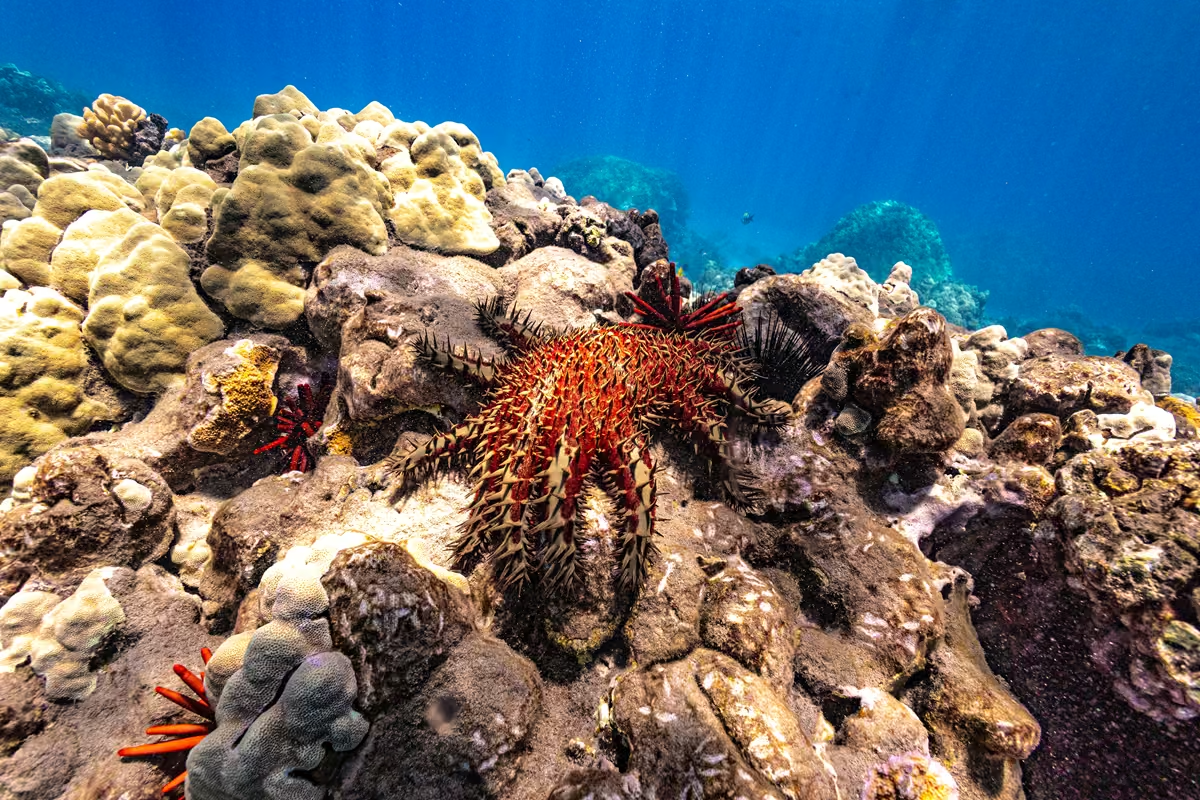
4. Crown-Of-Thorns: A Coral Predator With Sharp Spines
Crown-of-thorns sea stars belong to the genus Acanthaster. Their many arms and long, pointed spines look very different from the other stars here. Keep hands, knees, and fins well away: the spines are venomous and can puncture skin.
Adults feed on living coral by extending their stomach over the coral surface and digesting tissue outside their bodies. A bare skeleton can remain afterward. This tissue removal isn't the same process as bleaching, where stressed living coral loses its microscopic algal partners.
私たち coral bleaching in Maui guide explains why white coral alone doesn't reveal what happened.
Does One Crown-Of-Thorns Mean A Reef Is In Trouble?
No. Crown-of-thorns are naturally occurring reef predators. Large population outbreaks can damage reefs, but an individual sighting doesn't establish an outbreak or explain every patch of coral damage.
Notice an unusual concentration or extensive fresh damage? Record the location and date, and take photographs without touching anything. Tell the crew and use Hawaiʻi's reef-reporting guidance. Let reef managers assess the observation instead of trying to remove it yourself.
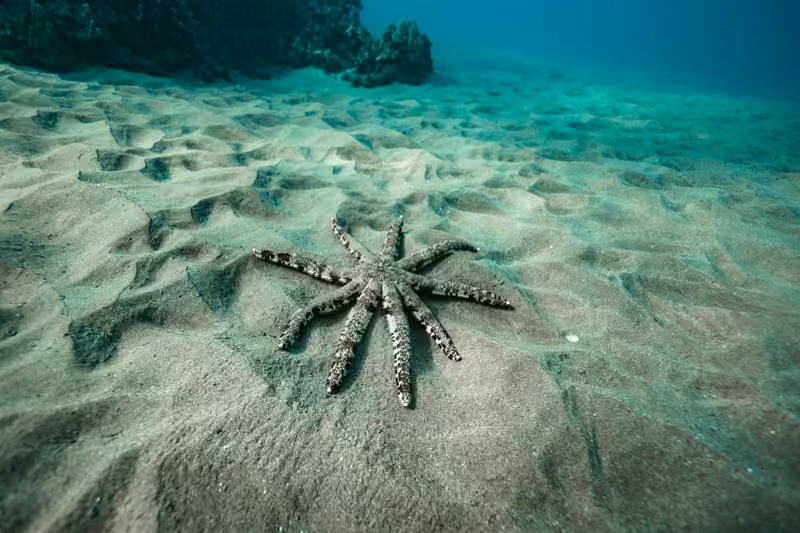
5. Magnificent Sea Star: More Than Five Arms
学名: Luidia magnifica. The magnificent sea star breaks the familiar five-pointed pattern with ten or eleven long arms spreading from its center. That many-armed outline gives you a useful starting point for identification.
This Hawaiian sea star can bury itself in sand, so it isn't always visible even where it occurs. Its sandy habitat also reminds us to appreciate the spaces between reefs, not just the coral itself.
Compare the whole outline without uncovering a hidden animal. A naturally exposed sighting is the moment to enjoy, not an invitation to dig.
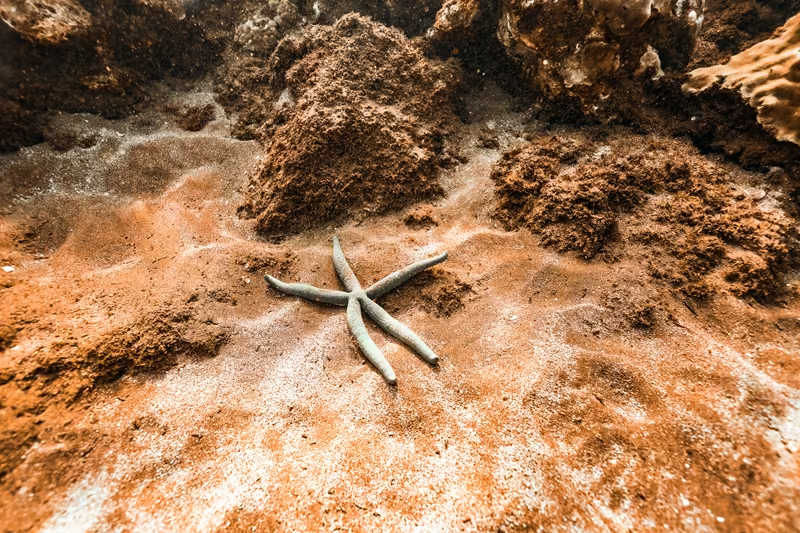
6. Green Linckia Sea Star: A Name That Doesn't Tell The Whole Story
学名: Linckia guildingi. The green Linckia has long, cylindrical arms extending from a small central disc. Despite its name, Hawaiian individuals can look dull green or brown, sometimes with darker spots.
It's a different species from the spotted Linckia described earlier. Compare the full body, markings, and surface texture rather than deciding from color alone.
A photograph can reveal details you missed during the swim. Include the entire animal when possible, then compare reference images afterward instead of moving closer than your swimming control allows.
Sea Stars Versus Brittle Stars
A few thin, moving arms protruding from a crevice may belong to a brittle star. These relatives belong to a different class, Ophiuroidea, and have a distinct central disc with long, jointed arms.
Brittle stars commonly shelter in cracks or beneath rocks, sometimes leaving only their arm tips exposed. Their flexible, snake-like arm movements differ from the slower tube-foot movement many sea stars use.
Enjoy the visible parts without pulling the animal out. Five arms alone won't tell you which group you're seeing; body shape and movement provide better clues.
What Do Maui Sea Stars Eat?
Different sea stars have different diets. Spotted Linckia collect fine organic material from reef surfaces, while cushion stars and adult crown-of-thorns eat coral tissue. Other sea stars elsewhere feed on animals such as mollusks.
Don't assume every star-shaped animal is a reef cleaner or that every species preys on coral. Their feeding roles are part of what makes this group interesting.
Sea stars are also food for other animals. Hawaiʻi's triton's trumpet snail can prey on coral-eating stars. The reef isn't a collection of isolated creatures; it's a network of interactions, many happening slowly enough that we overlook them.
What Can You Spot From The Surface?
Within your planned snorkeling area, look across exposed reef surfaces, crevices, sand, and rubble. Depending on the animal’s position, you might see a full outline or only part of an arm. Depth, water clarity, and concealment can make identification difficult.
A photograph taken at 25 feet doesn’t mean you’ll recognize the same animal from the surface. Don’t swim farther offshore, dive beyond your ability, turn over rocks, or reach into crevices to search for one.
Choose your outing based on your swimming ability and conditions first. Our マウイ島シュノーケリングコンディションガイド explains the planning checks. On a boat trip, stay within the crew’s designated area and ask for help identifying anything you notice. Treat a sea star sighting as a bonus.
How To Watch And Photograph Sea Stars Responsibly
Leave wild sea stars underwater and where you found them. Don't lift one for a beach photo, detach its tube feet, arrange its arms, or carry it into better light. A slow-moving animal is still an animal, not a photography prop.
Photograph the full outline when possible, including the arms and visible surface texture. A wider shot showing the surrounding habitat can be useful alongside a closer image. Record the location afterward, but don't rest your camera or hands on coral to steady the shot.
私たち マウイ島シュノーケリング写真ガイド covers practical camera habits. Stay with your buddy, check your position, and maintain enough clearance for your fins. If the animal is beyond your comfortable view, let that be part of the encounter.
Final Thoughts On Starfish In Maui
A spotted arm, a cushion-shaped body, or a beautifully textured star can reveal a whole new side of Maui's reefs. Start with the outline, notice the habitat, and resist the urge to make every sighting match a perfect five-pointed shape.
The best souvenir is the moment you recognize a living creature you might otherwise miss. Take the photograph when you can, leave the sea star undisturbed, and keep exploring with your eyes.