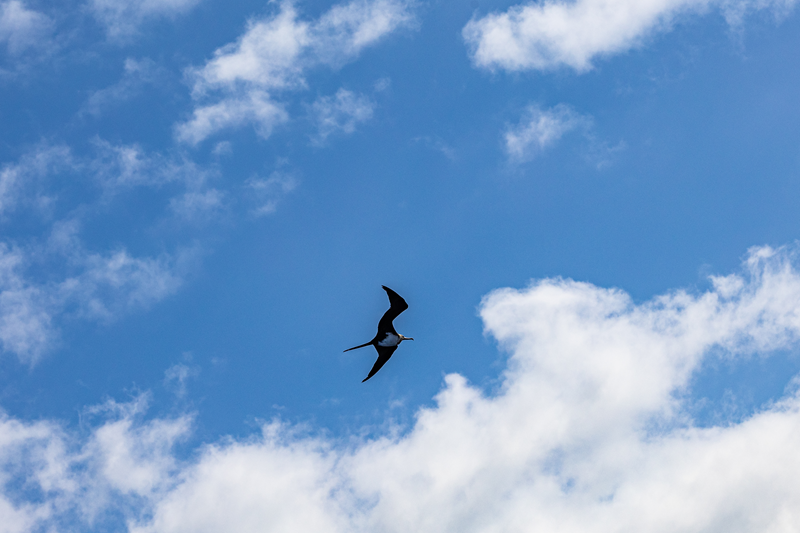
ザ great frigatebird in Maui, と呼ばれる ʻiwa in Hawaiʻi, is a large seabird with long, narrow wings, a hooked bill, and a deeply forked tail. You may spot one soaring over Molokini, Maui’s coastline, or coastal wetlands. Its silhouette is the quickest identification clue, while head and chest markings help distinguish adults from young birds.
主な要点:
ハワイ語名: ʻIwa means “thief,” referring to its food-stealing behavior, although it catches most of its own prey
Best ID clues: Long, narrow wings, a hooked bill, and a forked tail that can look pointed when folded
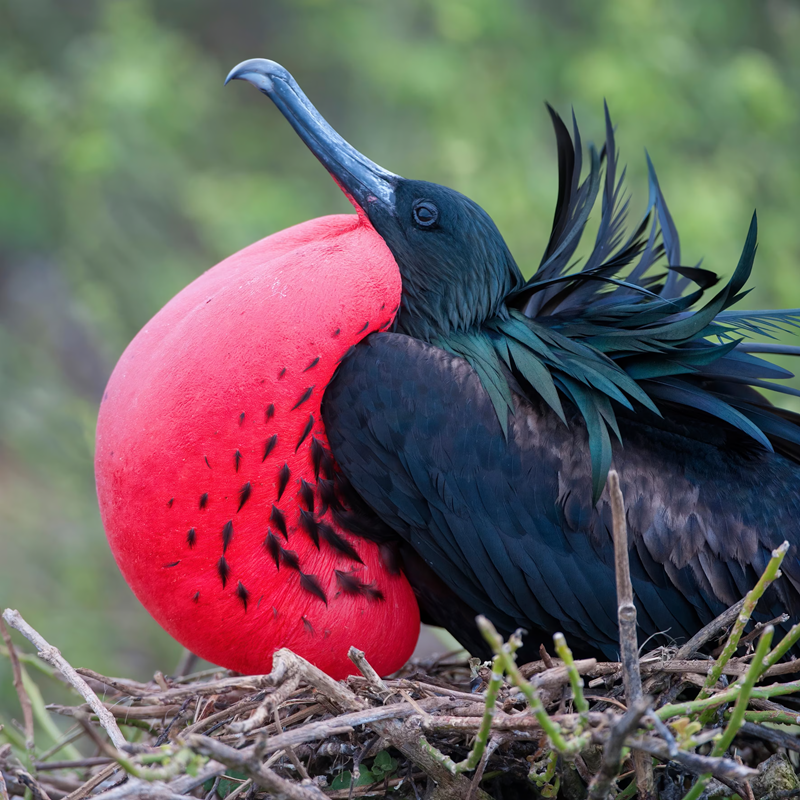
オスの特徴: Adult males are mostly black and can inflate a bright red throat pouch during courtship
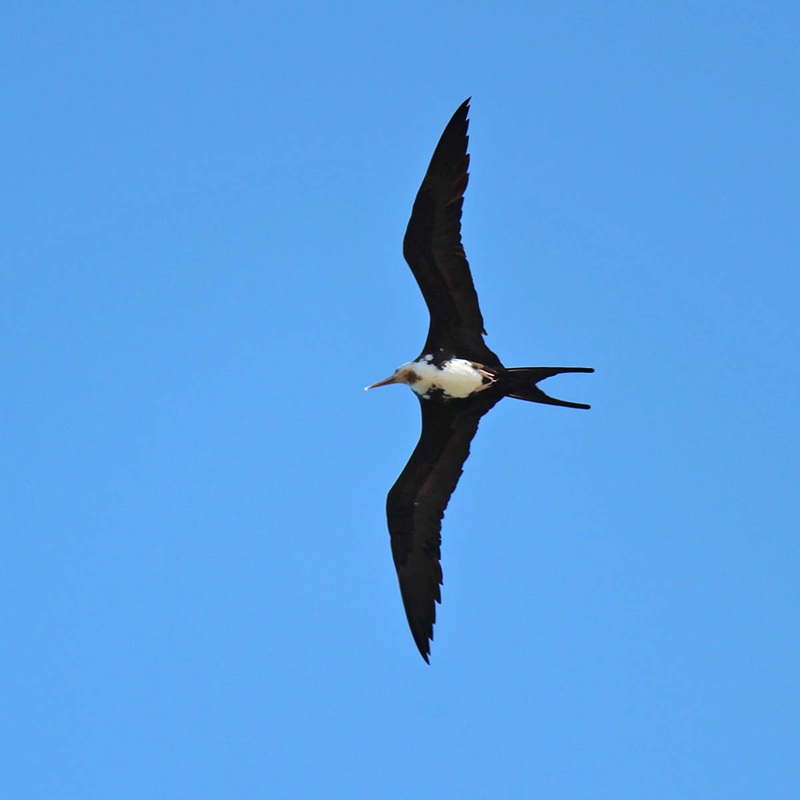
Female and young-bird markings: Adult females have a white breast patch; immature birds often have a pale head and chest
どこを探せばよいか: Scan the sky over Molokini, open ocean areas, Maui’s coastline, and coastal wetlands
視聴のヒント: Watch from the boat during the ride and between snorkel stops. Give birds space and remember that sightings aren’t guaranteed.
The great frigatebird (フレガータ・ミノール), called ʻiwa in Hawaiʻi, is a tropical seabird built for soaring over the ocean. Its long, narrow wings, hooked bill, and forked tail give it a distinctive silhouette.
ʻIwa means “thief,” referring to its habit of taking food from other seabirds. The English name frigatebird also refers to piracy. Despite that reputation, these birds catch most of their own food.
オオグンカンドリに関する簡単な情報
Get to know the great frigatebird, called ʻiwa in Hawaiʻi, including its size, markings, feeding habits, and distinctive flight.
トピック
詳細
一般名
オオグンカンドリ
ハワイ語の名前
イワ
学名
フレガータ・ミノール
Body length
About 33.5–41.3 inches (85–105 cm), measured from bill to tail
最良の身元確認の手がかり
Long, narrow, pointed wings, a hooked bill, and a deeply forked tail that can look like a single long point when folded
オスの模様
Adult males are almost entirely black and can inflate a bright red throat pouch during courtship
雌の模様
Adult females are larger than males, with dark plumage, a white breast patch, and a gray throat
Young birds
Immature birds often have a pale head, neck, and chest. Juveniles may show cinnamon-colored head and chest feathers.
どこを探すか
Scan the sky over Maui’s coastline, coastal wetlands, and open ocean, including waters around Molokini.
どうやって飛ぶのか
They use wind and rising air to soar for long periods with relatively little flapping.
彼らが食べるもの
Mainly fish and squid caught near the ocean surface. They catch most of their own food but sometimes steal prey from other seabirds.
名前の意味
ʻIwa means “thief,” referring to the bird’s food-stealing behavior.
視聴のヒント
While aboard the boat between snorkel stops, watch for soaring silhouettes. Use head and chest markings to help distinguish adults from young birds.
注意 Great frigatebird sightings aren’t guaranteed. Tail shape can change as the bird spreads or folds its feathers, and plumage varies with age and sex, so use several identification clues together.
You don’t need to be on a boat to watch for ʻiwa. Hawaiʻi Birding Trails lists Keālia Pond National Wildlife Refuge, Kanahā Pond State Wildlife Sanctuary, and Waiʻānapanapa State Park among Maui locations associated with the species. Scan the sky from designated public viewing areas and check each location’s access requirements before visiting.
オオグンカンドリの飛行と採餌方法
Great frigatebirds use long wings and lightweight bodies to soar over the ocean with relatively little flapping. They scan the surface for prey and can snatch fish or squid without landing on the water.
Although famous for stealing food, ʻiwa catch most of their own meals. They sometimes chase other seabirds until those birds drop or regurgitate prey, then swoop in to collect it. This behavior is called kleptoparasitism.
From the boat, watch for a frigatebird descending toward the surface or following a feeding flock. Those movements reveal more about its behavior than soaring alone.
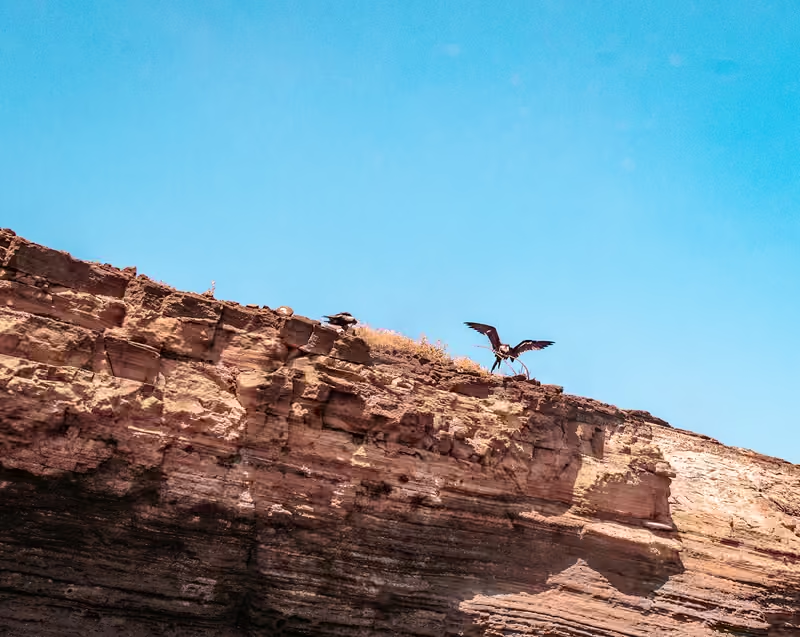
In Hawaiʻi, great frigatebirds breed in the Northwestern Hawaiian Islands and also use offshore islets in the main islands for roosting. A bird perched on a cliff may simply be resting; its presence doesn’t establish that it is nesting there.
ʻIwa usually build simple platform nests in shrubs, bushes, or low trees on islands and coastal areas. They often build nests with sticks and other natural materials. Because nests can be sensitive to disturbance, it’s important to give seabirds plenty of space and avoid walking into nesting areas.
ひよこの成長過程
Young ʻiwa develop slowly. Both parents initially help raise the chick, which spends several months in the nest before its first flight. Parental feeding can continue for more than a year after fledging, making their extended family care one of the species’ most remarkable traits.
Do not land on Molokini: The islet is a protected seabird sanctuary closed to ordinary public entry. Observe birds from the boat without approaching their resting areas.
The great frigatebird is called ʻiwa in Hawaiʻi. ʻIwa means “thief,” referring to its habit of stealing food from other seabirds. Despite that reputation, it catches most of its own food.
Yes, ʻiwa may be seen soaring near Molokini and over the ocean around Maui. Watch from the boat during the ride and between snorkel stops. Seeing a bird flying or resting nearby does not necessarily mean it is nesting there.
Look for long, narrow wings, a hooked bill, and a deeply forked tail that may look pointed when folded. Adult males are mostly black and can display a red throat pouch. Adult females have a white breast patch, while immature birds often have a pale head and chest.
Male ʻiwa inflate their red throat pouch during courtship to attract a mate. The pouch is not always inflated or easy to see, so its absence does not mean you are looking at a female or a different bird.
ʻIwa mainly eat fish and squid, which they can snatch near the ocean surface without landing. They catch most of their own prey but sometimes chase other seabirds until those birds release food. This food-stealing behavior is called kleptoparasitism.
No. Frigatebirds are wild seabirds, and sightings depend on their movements and feeding activity. You may notice them during a boat trip, but no particular tour, destination, or departure time guarantees an encounter.
Watch from a distance, do not feed or approach birds, and keep food and trash secure. Respect protected habitats and posted restrictions. Molokini’s land is a seabird sanctuary closed to ordinary public entry, so observe its birds from the boat rather than attempting to land.
Use these resources to learn about ʻiwa identification, feeding and nesting behavior, Maui birding locations, and seabird habitat protections. Before a snorkeling trip, check current safety guidance and marine forecasts.