Kurzantwort
Goatfish in Maui are reef fish in the family Mullidae, recognized by two whisker-like barbels beneath the chin. They sweep these sensory organs across sand, rubble, and reef crevices to find worms, crustaceans, mollusks, and other hidden prey. Hawaiian reefs support species called weke, moano, kūmū, munu, and related names, and many can change color rapidly while resting, feeding, or interacting.
Wichtigste Erkenntnisse:
- Bester Identifikationshinweis: Look for two flexible barbels extending from beneath the lower jaw
- Common Maui Names: Weke ʻā, weke ʻula, moano, moano kea, kūmū, munu, and weke pueo
- Feeding Style: Goatfish probe sand and rubble, then inhale prey and release sediment through their gills
- Color Changes: Resting and feeding fish may display noticeably different shades, stripes, bars, or saddles
- Wo suchen: Scan sandy channels, reef edges, rubble patches, lagoons, and sheltered ledges
- Viewing Rule: Don’t chase, feed, surround, touch, or block a goatfish while it searches for food
If you notice a reef fish sweeping two whisker-like feelers across the sand, you’ve probably found a goatfish. These bottom-feeders look as though they’re searching with a tiny metal detector built into the chin.
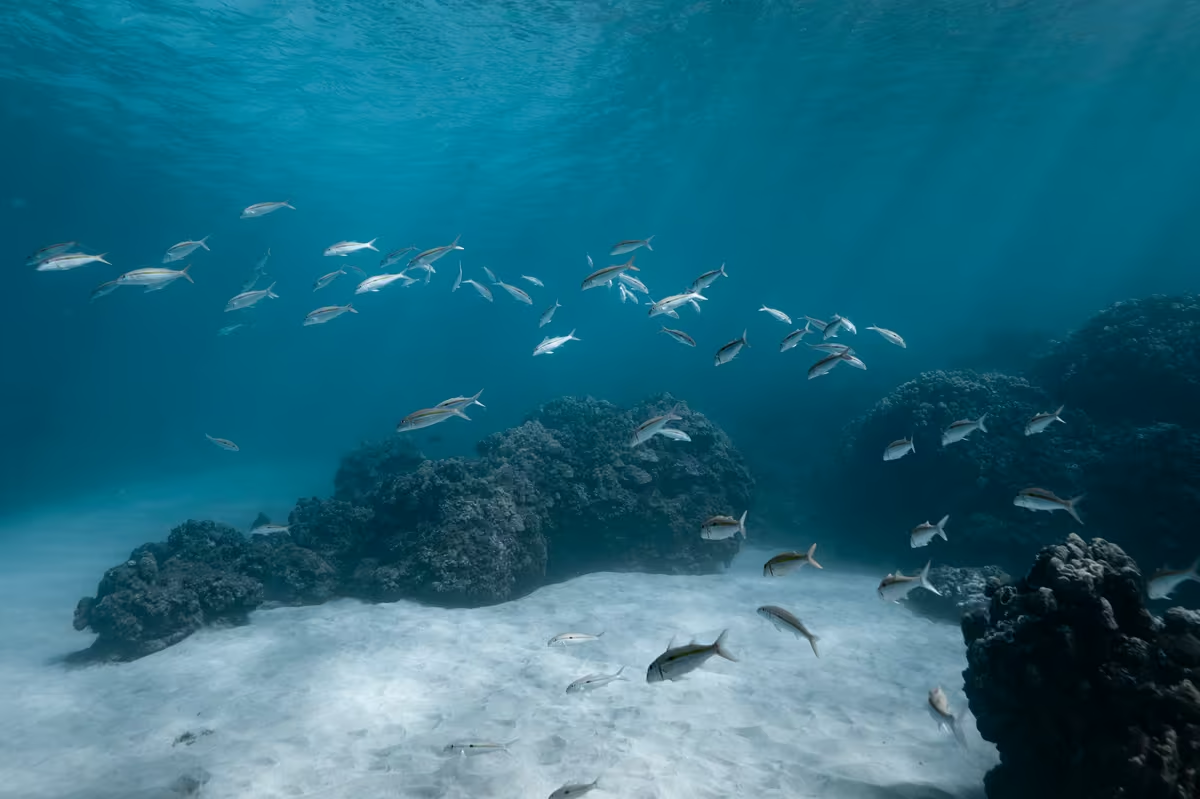
Goatfish in Maui include striped weke, barred moano, the culturally important kūmū, and related species. Some rest in schools during the day, while others probe sand, rubble, and reef crevices for hidden prey.
Color alone can make identification tricky. A goatfish may look pale while resting, then develop stronger red, yellow, blue, or dark markings when it begins feeding. Hawaiian names also identify particular species rather than one single fish called “goatfish.”
This guide explains the barbels, species names, color changes, feeding behavior, cultural importance, and responsible photography tips that help Maui snorkelers recognize them.
What Is A Goatfish?
Goatfish belong to the family Mullidae. They usually have long bodies, forked tails, two separated dorsal fins, and a pair of sensory barbels beneath the lower jaw.
The Waikīkī Aquarium lists 10 goatfish species native to Hawaiian reefs. It also notes that no single general Hawaiian name covers all goatfish. Instead, different species have names such as weke ʻā, weke ʻula, moano, moano kea, kūmū, and munu.
The name “goatfish” comes from the two barbels hanging beneath the chin. When extended, they resemble a small beard. When the fish isn’t using them, the barbels can fold into grooves beneath the head and become surprisingly hard to see.
Why Goatfish Have Whisker-Like Barbels
The barbels are sensitive feeding tools rather than decorative whiskers. Their surfaces contain receptors that help the fish detect prey through touch and chemical cues.
A feeding goatfish moves the barbels across sand, rubble, and reef cracks. When it detects something edible, the fish may push its snout into the bottom and inhale a mixture of prey and sediment. It swallows food while expelling sand through the gill openings.
The barbels help goatfish locate hidden animals, including:
- Worms
- Small crabs and shrimp
- Weichtiere
- Brittle stars
- Heart urchins
- Fish eggs and other small bottom-dwelling prey
Males may also display the barbels during courtship. For snorkelers, the easiest behavior to spot is their steady probing motion over the bottom.
How To Identify A Goatfish In Maui
The easiest way to identify a goatfish in Maui is to look beneath the lower jaw. Every goatfish has two flexible barbels that it sweeps across sand and rubble while searching for food. After confirming the barbels, compare the fish’s stripes, bars, tail markings, and saddles with the species descriptions below. Don't rely on color alone because many goatfish can change appearance quickly.
- Barbels: Two feelers beneath the chin
- Body: Usually elongated with a forked tail
- Verhalten: Often swim head-down while probing sand
- Muster: Use stripes, bars, saddles, and tail markings for species ID
Goatfish Species Maui Snorkelers May Encounter
Hawaiian reefs support more goatfish species than most visitors realize. These are several of the most useful names and patterns to know.
Note: The Waikīkī Aquarium lists 10 goatfish species native to Hawaiian reefs; this guide focuses on seven that Maui snorkelers can easily recognize.
Yellowstripe Goatfish, or Weke ʻĀ
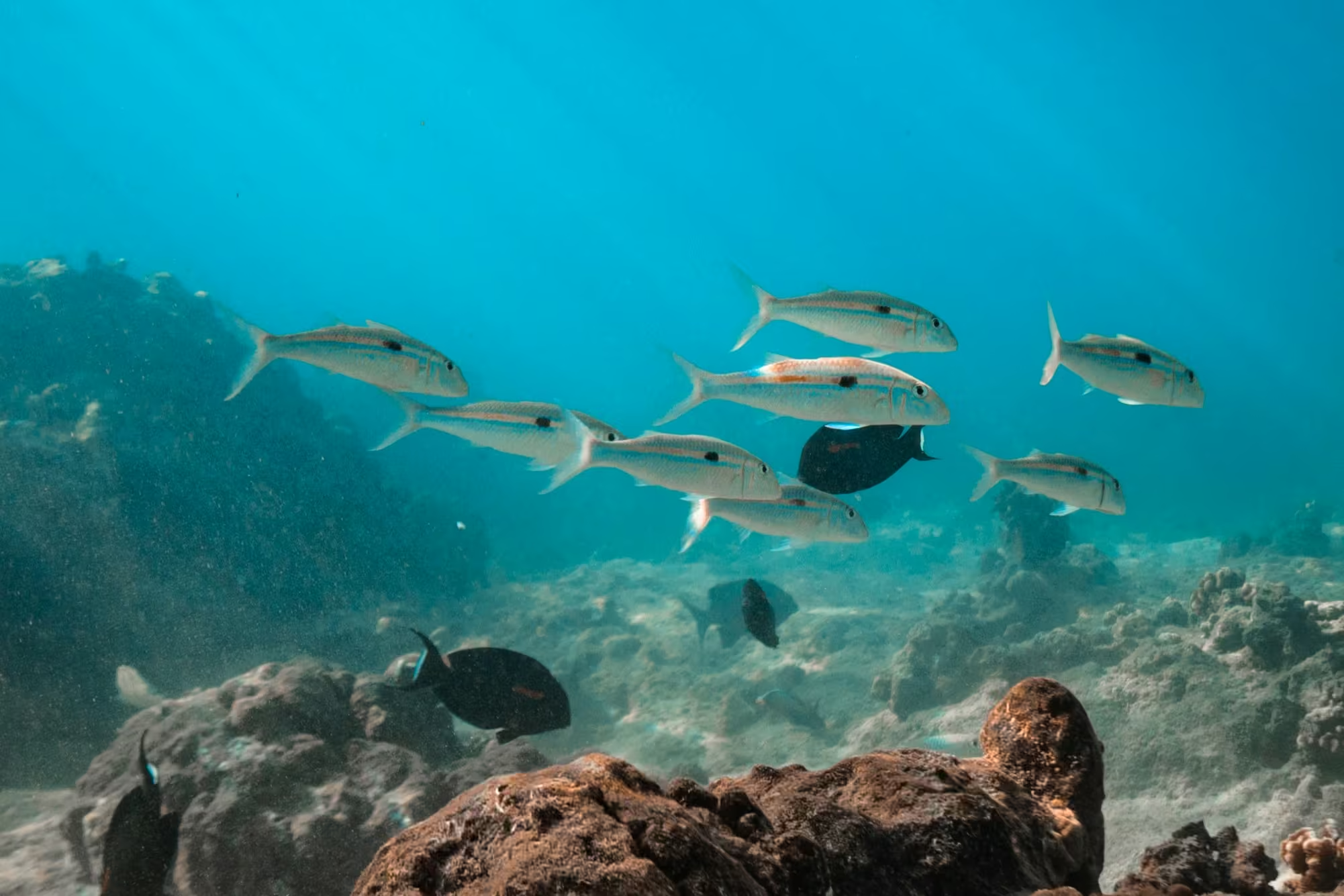
Mulloidichthys flavolineatus has a pale silver or whitish body with a yellow stripe running from the eye toward the tail. Many individuals also show a dark oval or rectangular blotch below the first dorsal fin.
Weke ʻā often gather over shallow sand near reef structure. Young weke are called ʻoama, a name strongly connected with seasonal nearshore fishing traditions in Hawaiʻi.
Yellowfin Goatfish, or Weke ʻUla
Mulloidichthys vanicolensis has a yellow body stripe and yellow fins but usually lacks the dark side blotch seen on weke ʻā. Its upper body may look pink, orange, or reddish, especially when active.
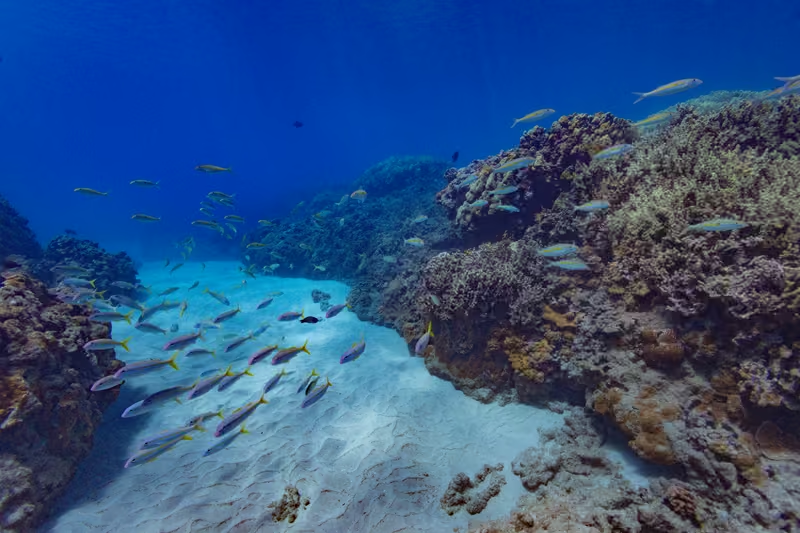
Yellowfin goatfish commonly rest in daylight schools, then spread over sand to feed after dark. They may look nearly transparent until light catches the yellow stripe.
Manybar Goatfish, Or Moano
Parupeneus multifasciatus is one of the easier barred goatfish to recognize. It may appear gray, brown, red, or purplish with alternating dark and pale bars, including a dark band through or behind the eye.
Moano often forage by day over sand, rubble, and reef flats, alone or in smaller groups with their barbels working constantly.
Gold-Saddle Goatfish, Or Moano Kea
Parupeneus cyclostomus can look dramatically different from one sighting to the next. Some individuals are yellow or golden, while others appear pale, blue-green, gray, or purplish.
The best clue is the bright yellow saddle near the upper base of the tail. Adults are often solitary or in small groups around coral, rock, and rubble.
Whitesaddle Goatfish, Or Kūmū
Parupeneus porphyreus is an endemic Hawaiian species identified by reddish coloration, pale body streaking, and a small white saddle-like mark near the base of the tail.
Kūmū often shelter beneath ledges or among coral during the day and move out at night to feed. Because color can shift quickly, the white saddle and overall body pattern are more dependable than one exact shade of red.
Twosaddle Goatfish, Or Munu
Parupeneus insularis may show broad dark saddle-like markings across a paler body, although adults can also look reddish, violet, or darker while active. It occurs around coral reefs and nearby rocky or sandy habitats.
Older guides may use a different scientific name for this fish. Current references list the Hawaiian munu as Parupeneus insularis.
Bandtail Goatfish, Or Weke Pueo
This smaller goatfish is recognized by dark and pale bands across the tail and markings along its silvery body. Current taxonomy generally lists it as Upeneus taeniopterus, while older Hawaiian sources may list it as Upeneus arge.
It often uses shallow sandy or muddy habitat near reef structure. Because common and scientific names can change, the banded tail remains the most practical field clue.
Why Goatfish Change Color
Goatfish are capable of rapid color and pattern changes. A resting fish may look pale and subdued, while the same individual can develop stronger bars, red tones, or contrasting markings as it searches and feeds.
Research on rapid color change in goatfish found that feeding-related patterns can appear within seconds and may attract following fish. The exact function can vary by species, and color also shifts with rest, light, depth, and background.
This is why one photograph may not match another even when both show the same species. Use several clues together:
- Stripe and saddle placement
- Dark spots or bars
- Tail pattern
- Körperform
- Habitat
- Whether the fish was resting or actively feeding
How Goatfish Find Food Beneath The Sand
A feeding goatfish usually swims close to the bottom with its head angled downward. The barbels sweep ahead of the mouth, sampling the surface and slipping into small gaps.
When it detects prey, the fish may dig vigorously enough to create a small cloud of sand. Other reef fish sometimes follow and grab animals exposed by the disturbance.
This feeding style makes goatfish predators of bottom-dwelling invertebrates and helps snorkelers recognize them when markings are hard to see.
Don’t mistake normal digging for a fish in distress. Give it room and watch the barbels do the work.
Where Snorkelers Should Look For Goatfish
Around Maui, this habitat occurs at many reef systems, including areas around Molokini, Turtle Town, Coral Gardens, Honolua Bay, and other reefs where sand borders coral or lava rock. Goatfish sightings are never guaranteed, so focus on suitable habitat rather than visiting one location specifically for this fish.
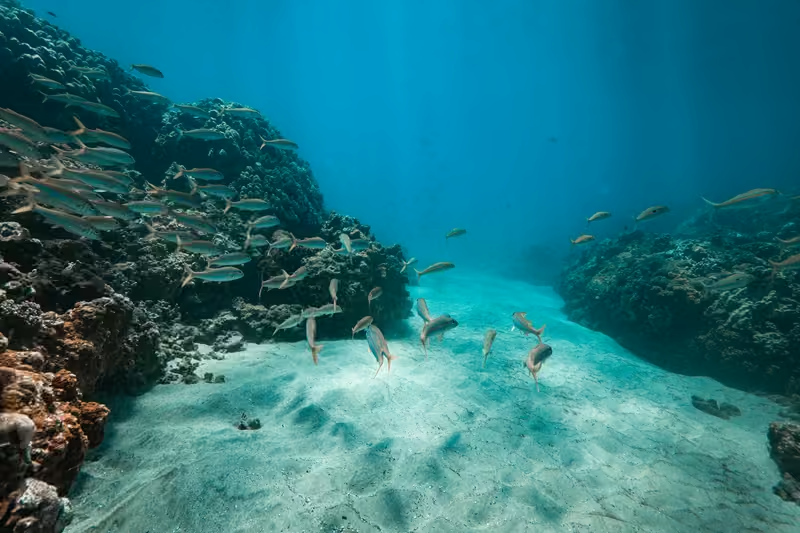
Look along the boundary where sand meets coral, lava rock, or rubble. Goatfish often use open sand for feeding while staying close enough to reef structure for shelter.
Good places to scan include:
- Shallow sand channels between coral patches
- Reef flats with small rubble openings
- Sandy bottoms near rocky ledges
- Protected lagoons and bays
- Outer reef slopes with nearby sand
- Daytime resting schools hovering above the bottom
Move slowly and look below the fish, not only at the body. Extended barbels and small clouds of disturbed sand often reveal a goatfish before the color pattern does.
Nutzen Sie unsere Maui-Führer für tropische Fische for more reef identification help and our Maui Korallenriffe Reiseführer to understand the habitat these fish use.
Ecological And Cultural Importance
Goatfish connect sandy-bottom prey with the broader reef food web. By finding worms, crustaceans, mollusks, and other hidden animals, they influence which small organisms are consumed and may expose food to following fish.
They also play an important role in Hawaiian fishing and food traditions. The Waikīkī Aquarium notes that all Hawaiian goatfish species have long been valued as food. Moano is recognized in a Hawaiian song, while kūmū was highly esteemed and used in ceremonial offerings, including occasions connected with canoe launching and hula.
Young weke called ʻoama are also part of a well-known seasonal fishing tradition. Current Maui rules regulate goatfish by species, size, and in some cases bag limit, so anyone fishing should check the latest Hawaiʻi DLNR rules rather than relying on an old guide.
Responsible Viewing And Photography
Goatfish make excellent photography subjects when you avoid interrupting their feeding or resting behavior.
- Langsam nähern: Fast kicking may scatter a school or send a feeding fish away.
- Stay Off The Bottom: Don’t stand in the sand or on coral to steady the camera.
- Photograph The Barbels: A slight side angle can show the fish’s most distinctive feature.
- Capture The Tail And Saddle: These markings often help with identification later.
- Expect Color Changes: Take several natural photos rather than assuming the first color is permanent.
- Don’t Feed Fish: Feeding changes natural behavior and may draw wildlife toward people.
- Leave A Clear Path: Never surround a resting school or block a fish against the reef.
For better underwater images, use our Maui Schnorchel-Fotografie-Guide. Keep your fins controlled, and avoid pushing a camera into coral just to close a few feet.
Plan A Safe Goatfish-Spotting Snorkel
Goatfish are easiest to watch when the water is calm and clear enough for you to hover without fighting surge or current.
Check wind, swell, visibility, and water-quality advisories before entering. Snorkel with a capable buddy, stay within your swimming ability, and leave the water if conditions become rough, murky, tiring, or uncomfortable.
No goatfish sighting is guaranteed. The best approach is to choose safe conditions, move slowly, and let the reef reveal what’s there.
Final Thoughts On Goatfish In Maui
Goatfish in Maui are easier to appreciate once you know where to look. Watch for two barbels sweeping the sand, a yellow stripe crossing a pale body, dark bars appearing during feeding, or a bright saddle near the tail.
Names such as weke, moano, kūmū, and munu describe different species and carry their own identification and cultural meaning. Color can change quickly, so combine pattern, shape, habitat, and behavior before naming a fish from one photo.
Most importantly, give goatfish enough space to feed, school, and rest naturally. Their whiskers are already doing the searching. Your job is simply to slow down and notice.