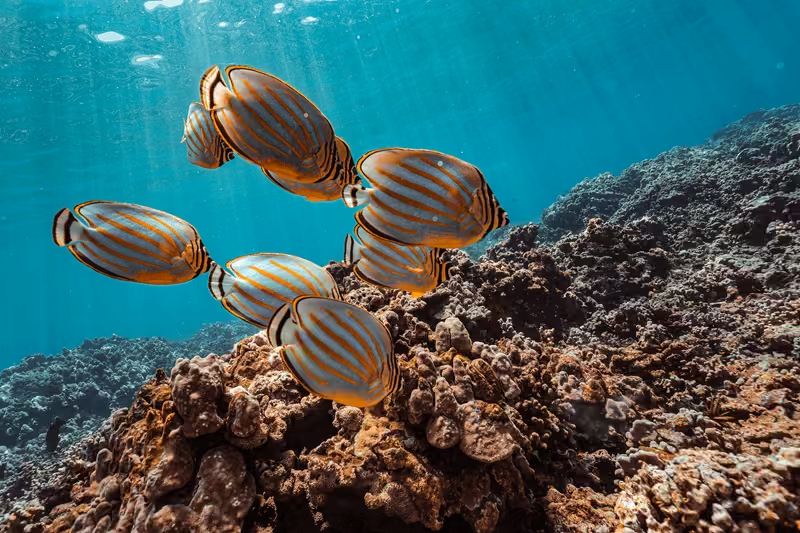
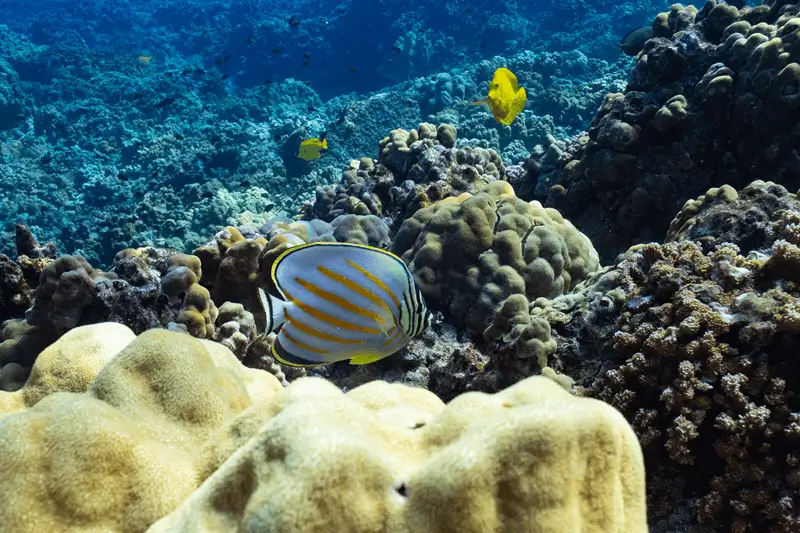
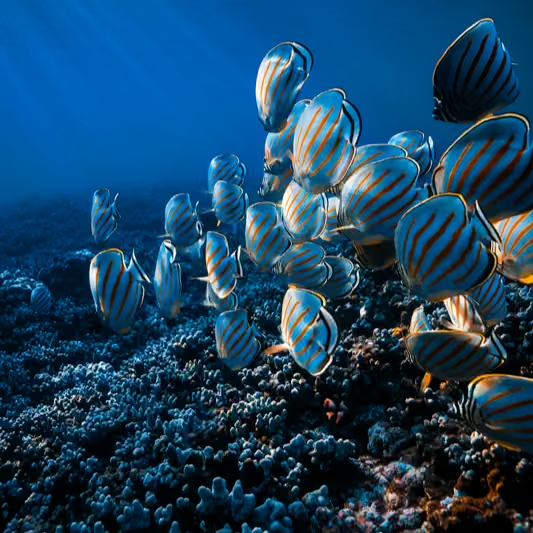
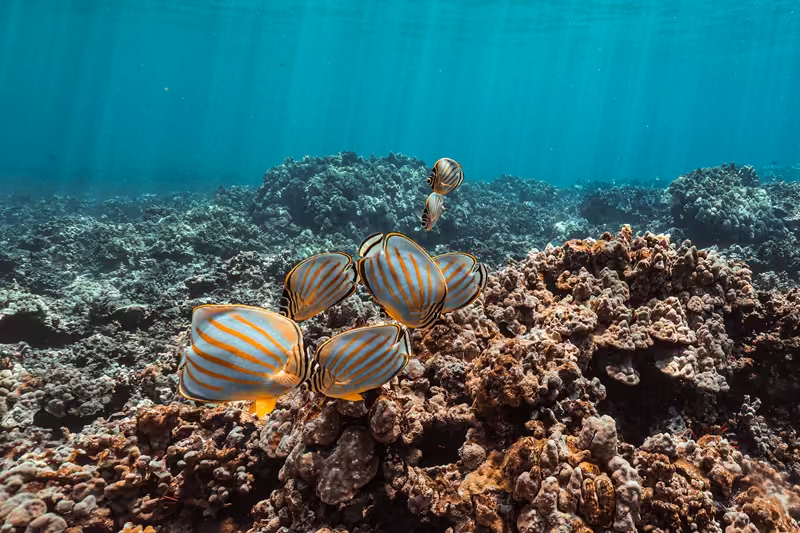
行くとき マウイ島でのシュノーケリング, そこには、澄んだ水、サンゴ礁の生息地、そして島のサンゴ礁を生き生きとさせる色鮮やかな熱帯魚がいます。特に目を引くサンゴ礁の魚は 装飾的なチョウチョウウオ. This bright, striped fish has a pale body, diagonal orange markings, dark head bars edged in yellow, and two black bars on the tail.
Get to know the ornate butterflyfish, from its distinctive orange stripes to its close relationship with living coral.
トピック
詳細
一般名
装飾的なチョウチョウウオ
ハワイ語の名前
Kīkākapu, a Hawaiian name shared by several butterflyfish species
学名
Chaetodon ornatissimus
魚類科
Chaetodontidae, the butterflyfish family
サイズ
約8インチ(20cm)まで
最良の身元確認の手がかり
A pale body with diagonal orange to orange-brown stripes, two dark head bars edged in yellow, and two black bars on the tail
どこを探すか
Coral-rich lagoon and seaward reefs, especially around living coral. Habitat alone doesn’t indicate safe snorkeling conditions.
Adult behavior
Adults commonly swim in pairs and remain around familiar reef areas
Young fish
Juveniles are typically solitary and shelter among branching corals
彼らが食べるもの
A live-coral specialist, also called an obligate corallivore, that depends on living coral for food
似た魚
Threadfin butterflyfish have dark diagonal body lines and a yellow rear body. Raccoon butterflyfish have a broad black eye mask with a white band behind it.
シュノーケリングのヒント
Watch without approaching closely. Keep your body and fins clear of coral, and don’t touch, chase, or feed fish.
注意 Sightings aren’t guaranteed. Clear visibility can make identification easier, but seeing an ornate butterflyfish doesn’t establish that ocean conditions are safe or that the entire reef is healthy.
マウイ島でシュノーケリング中にオオチョウチョウウオを見分ける方法
The easiest way to identify an ornate butterflyfish is to slow down and scan coral-rich areas carefully. These fish usually don’t stand out on open sand. You’re more likely to notice them near coral heads, reef edges, and healthy reef structure where they can feed and shelter.
斜めのオレンジ色の縞模様を探してください
Diagonal orange stripes across a pale body are the easiest starting clue. Check the head and tail next: ornate butterflyfish have two dark, yellow-edged head bars and two black tail bars. Use the whole pattern rather than body color alone, which can look different underwater.
Ornate Butterflyfish Vs Similar Maui Fish
Several butterflyfish can look similar at first glance. These differences can help you narrow down what you saw:
Ornate butterflyfish: Orange diagonal stripes across a pale body, dark head bars, and two black tail bars.
Threadfin butterflyfish: Dark diagonal lines rather than orange bands, a yellow rear body, and a trailing dorsal-fin filament on adults.
Raccoon butterflyfish: A yellowish body with a broad black eye mask and a contrasting white band immediately behind it.
Start with the stripe color, then check the face and tail. A side-view photo can help you compare those details later without having to follow the fish.
サンゴ礁付近でのペアスイミングに注意してください
Ornate butterflyfish are often seen close to coral reef habitats and may appear alone or in pairs. If you spot one, don’t rush toward it. Float calmly, keep your fins away from the reef, and look around the same coral area. Another ornate butterflyfish may be nearby.
コーラルガーデン is another reef area where snorkelers may see ornate butterflyfish and other Maui reef fish. Coral Gardens has coral formations and reef structure to explore when conditions are suitable, but wind, swell, and visibility still determine whether snorkeling is appropriate. Because ornate butterflyfish stay close to reef structure, this is a good place to look carefully along coral heads and ledges.
What Ornate Butterflyfish Eat And Why Living Coral Matters
Ornate butterflyfish are obligate corallivores, meaning they depend on living coral for food. They feed directly from coral surfaces rather than mainly grazing algae or hunting larger prey.
That close relationship helps explain why coral-rich habitat matters to this species. Losing living coral can also mean losing its food supply. However, spotting one ornate butterflyfish isn’t enough to judge the health of an entire reef.
Give fish room to feed, and keep your body, equipment, and fins clear of coral. Watch their behavior without touching the habitat they depend on.
アカチョウチョウウオはサンゴ礁でどのように行動するのか
Adult ornate butterflyfish are commonly seen in pairs and tend to remain around familiar reef areas. Watching their movements can be as interesting as identifying their colors: look for two fish moving through the same coral section without approaching them.
Young ornate butterflyfish behave differently. Juveniles are typically solitary and shelter among branching corals, making them less obvious than adults swimming together. Seeing one fish alone doesn’t rule out an ornate butterflyfish identification.
Use mineral-only sunscreen with zinc oxide or titanium dioxide as the active ingredients, and wear sun-protective clothing.
フィンは体の後ろ側に向け、浅瀬のサンゴ礁から離してください。.
リラックスして、ゆっくりと動き、海洋生物が自然な行動をとるのを待ちましょう。.
If you spot an ornate butterflyfish, enjoy watching it from a respectful distance. Keep your body and fins clear of coral, and let the fish continue feeding without following it.
The ornate butterflyfish, Chaetodon ornatissimus, is a reef fish found in Hawaiʻi and elsewhere in the Indo-Pacific. Look for orange diagonal stripes across a pale body, dark head bars edged in yellow, and two black bars on the tail.
Ornate butterflyfish are live-coral specialists, also called obligate corallivores. They depend on living coral for food, which makes protecting coral habitat especially important.
You recognize an ornate butterflyfish by its orange diagonal stripes, but watching it move around coral makes the sighting even more memorable. Take your time, give the fish room, and keep clear of the reef. For help identifying other fish you notice along the way, explore our マウイ島の魚類識別ガイド.
ソースと更新情報
Use these trusted resources to confirm ornate butterflyfish identification, habitat, diet, reef protection guidance, Maui sunscreen requirements, snorkeling safety, water quality, and marine conditions.